OP-ED COLUMNIST - Escape From New York - Op-Ed - NYTimes.com
New York City holds a special place in the collective conscience of Black America.
Not only does it have the highest concentration of blacks --
according to the 2000 Census, there were more blacks living in New York
City than in all but four whole states -- much of black intellectual
power and cultural capital has been accrued within its borders.
It gave voice to Shirley Chisholm, refuge to Malcolm X, legs to
Althea Gibson and opportunity to Jackie Robinson. It was the incubator
of the Harlem Renaissance, the proving ground of jazz and the birthplace
of hip-hop.
It was a black Mecca and magnet. Was.
Read more here:
http://query.nytimes.com/gst/fullpage.html?res=980CE3D81631F93AA25750C0A9679D8B63
Monday, March 28, 2011

Tuesday, March 22, 2011
2010 Census Results for African-Americans
An article published by USA Today shows that according to 2010 census data, the black population is declining in a growing number of major cities — more evidence that the settlement pattern of African Americans is changing as they disperse to suburbia and warmer parts of the nation. The decline is due, in part, to three trends:
Read the full article here: http://www.usatoday.com/news/nation/census/2011-03-22-1Ablacks22_ST_N.htm
So what is the economic and educational impact for African-Americans?
- Blacks — many in the middle or upper-middle class — leaving cities for the suburbs.
- Blacks leaving Northern cities for thriving centers in the South.
- The aging of the African-American population, whose growth rate has dropped from more than 16% in the 1990s to about 10% since 2000.
Read the full article here: http://www.usatoday.com/news/nation/census/2011-03-22-1Ablacks22_ST_N.htm
So what is the economic and educational impact for African-Americans?
Sunday, March 20, 2011
20 Inspirational Women from African Diaspora in Europe
 |
| Mariéme Jamme http://mariemejamme.com/ |
20 inspirational women of african diaspora in europe 2011 list
Read the full press release here: http://pressreleaser.org/international-womens-day-2011-20-inspirational-women-from-african-diaspora-in-europe/1346922View more presentations from Francine Beleyi.
Check out EH post on one of the 20 Inspirational Women recognized, Salha L Kaitesi's work: http://experiencinghistory.blogspot.com/2011/03/fair-trade-not-aid-for-rwandan-women.html
The African Diaspora Professional Women in Europe (ADIPWE), is an online forum which aims aim to:
- Celebrate the success of African Women in Europe
- Give visibility to African Women who have achieved success but are still unknown
- Inspire the new generation of African Women and share ideas to fulfil their potential
- Contribute to Africa rebranding and development by identifying opportunities to transfer the vast amount of knowledge gained in Europe
For more information about ADIPWE, visit http://www.adipwe.wordpress.com/.
 |
Chimamanda Adichie http://list.co.uk/ |
Friday, March 18, 2011
Fair Trade, Not Aid for Rwandan Women
"Every time you watch the news and anything about Africa comes on, nine out of ten times it will be about organisations working in Africa that need the aid...I do appreciate that these organisations couldn't function without the aid, but on the other hand there are companies that don't require aid."
Salha L Kaitesi, Rwandan Entrepreneur
The Beauty of Rwanda is all about creating a platform for the Rwandan women to draw income from fair trade, and not aid from donors. Kaitesi speaks passionately about fair trade being a sustainable option for the African continent.
In late 2010 Kaitesi founded the company Beauty of Rwanda which recently launched Only One Basket. The idea behind Only One Basket is that buying a single item would help advance trade and better lives of the producers. The trade fair will be taken to Kigali, the Rwandan capital, in May. After Kigali, the aim is to take the crafts to various trade channels. "We plan on having as many "only one basket" events as possible. You never know, we could be in your city soon," Kaitesi said.
"Africa is a rich continent and with the right platform the whole continent is capable of sustaining itself."
Salha L Kaitesi
Kaitesi has been named as one of 20 inspirational women of African Diaspora in Europe 2011 by the organisation African Diaspora Professional Women in Europe. So, what does this well-recognised and inspirational, yet down-to-earth African woman think the future holds for her Rwandan counterparts?
"Rwandan women believe that the sky is the limit. They are committed, hard working individuals. Their strength and contribution to the economy in Rwanda is there for all to see. I cannot help but envision a brighter future for Rwandan women."
Read the full article here: http://www.africagoodnews.com/africa/newsletters/item/2130-fair-trade-not-aid-for-rwandan-women.html
Read more about Beauty of Rwanda here:
http://beautyofrwanda.blogspot.com/2011/01/beauty-of-rwanda-by-salha-l-kaitesi.html
www.twitter.com/beautyofrwanda
Salha L Kaitesi, Rwandan Entrepreneur
 |
| Salha L Kaitesi |
In late 2010 Kaitesi founded the company Beauty of Rwanda which recently launched Only One Basket. The idea behind Only One Basket is that buying a single item would help advance trade and better lives of the producers. The trade fair will be taken to Kigali, the Rwandan capital, in May. After Kigali, the aim is to take the crafts to various trade channels. "We plan on having as many "only one basket" events as possible. You never know, we could be in your city soon," Kaitesi said.
"Africa is a rich continent and with the right platform the whole continent is capable of sustaining itself."
Salha L Kaitesi
Kaitesi has been named as one of 20 inspirational women of African Diaspora in Europe 2011 by the organisation African Diaspora Professional Women in Europe. So, what does this well-recognised and inspirational, yet down-to-earth African woman think the future holds for her Rwandan counterparts?
"Rwandan women believe that the sky is the limit. They are committed, hard working individuals. Their strength and contribution to the economy in Rwanda is there for all to see. I cannot help but envision a brighter future for Rwandan women."
Read the full article here: http://www.africagoodnews.com/africa/newsletters/item/2130-fair-trade-not-aid-for-rwandan-women.html
Read more about Beauty of Rwanda here:
http://beautyofrwanda.blogspot.com/2011/01/beauty-of-rwanda-by-salha-l-kaitesi.html
www.twitter.com/beautyofrwanda
Friday, March 11, 2011
"A Raisin in the Sun" hits Broadway
"All art is ultimately social: that which agitates and that which prepares the mind for slumber..."
Lorraine Hansberry

In 1959, Lorraine Hansberry's 'A Raisin in the Sun' premiered on Broadway. The play ran for 530 performances, becoming the longest running Broadway play written by an African-American. A Raisin in the Sun was the first play written by a black woman to be produced on Broadway, as well as the first play with a black director (Lloyd Richards) on Broadway. With a cast in which all but one are African-Americans, A Raisin in the Sun was considered to be a risky investment, and it took over a year for producer Philip Rose to raise enough money to launch the play. After touring to positive reviews, it premiered on Broadway on March 11, 1959.
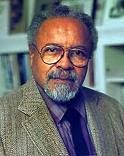 |
| Lloyd Richards |
In 1960 A Raisin In The Sun was nominated for four Tony Awards:
- Best Play - Written by Lorraine Hansberry; produced by Philip Rose, David J. Cogan
- Best Actor in Play - Sidney Poitier
- Best Actress in a Play - Claudia McNeil
- Best Direction of a Play - Lloyd Richards
The working title of A Raisin in the Sun was originally ' The Crystal Stair' after a line in a poem by Langston Hughes. The new title was from another Langston Hughes poem, which asked: "What happens to a dream deferred? / Does it dry up like a raisin in the sun, / Or does it explode?" All experiences in this play echo a lawsuit (Hansberry v. Lee, 311 U.S. 32 (1940)), to which the Hansberry family was a party when they fought to have their day in court because a previous class action about racially motivated restrictive covenants (Burke v. Kleiman, 277 Ill. App. 519 (1934) was similar to the case at hand. Lorraine reflects upon the litigation in her book To Be Young, Gifted, and Black:

"25 years ago, [my father] spent a small personal fortune, his considerable talents, and many years of his life fighting, in association with NAACP attorneys, Chicago’s ‘restrictive covenants’ in one of this nation's ugliest ghettos. That fight also required our family to occupy disputed property in a hellishly hostile ‘white neighborhood’ in which literally howling mobs surrounded our house… My memories of this ‘correct’ way of fighting white supremacy in America include being spat at, cursed and pummeled in the daily trek to and from school. And I also remember my desperate and courageous mother, patrolling our household all night with a loaded German Luger (pistol), doggedly guarding her four children, while my father fought the respectable part of the battle in the Washington court."

Hansberry noted that "A Raisin in the Sun" introduced details of black life to the overwhelmingly white Broadway audiences, while director Richards observed that it was the first play to which large numbers of blacks were drawn. The New York Times stated that A Raisin in the Sun "changed American theater forever."

In 1961, a film version of A Raisin in the Sun was released featuring its original Broadway cast of Sidney Poitier, Ruby Dee, Claudia McNeil, Diana Sands, Ivan Dixon, Louis Gossett, Jr. and John Fiedler. Hansberry wrote the screenplay, and the film was directed by Daniel Petrie. In 1973, the play was turned into a musical, Raisin. It was written by Hansberry's former husband, Robert Nemiroff. It won the 1974 Tony Award for Best musical. In 1989 it was adapted into a made for TV movie starring Danny Glover and Esther Rolle. This production received three Emmy Award nominations.
There has been one Broadway revival in 2004 at the Royale Theatre. Another made for television film, premiered on February 25, 2008 on ABC. The cast is mostly made up of actors from the 2004 revival, including Sean "Diddy" Combs, Phylicia Rashad, Sanaa Lathan, Sean Patrick Thomas, and John Stamos .This version of the play was directed by Kenny Leon.

"A woman who is willing to be herself and pursue her own potential runs not so much the risk...of loneliness as the challenge of exposure to more interesting men -- and people in general"
Lorraine Hansberry


"The melody was one that I had known for a very long time."
Lorraine Hansberry


Subscribe to:
Posts (Atom)
You may also enjoy...

EH Canvas Spotlight - Flow by Monica Stewart

Flow by Monica Stewart