Showing posts with label president barack obama. Show all posts

Friday, July 19, 2013

President Obama Speaks...

Here  is a video and transcript of President Obama's remarks this afternoon, without any commentary


Here is the transcript courtesy of:  

REPORTERS: Whoa!

Q: Hello.

PRESIDENT OBAMA: That’s so -- that’s so disappointing, man. Jay, is this kind of -- the kind of respect that you get? (Laughter.)

Q: Wake up!

Q: What brings you out here, Mr. --

PRESIDENT OBAMA: You know, on -- on -- on television it usually looks like you’re addressing a full room.

Q: (Laughs.) It’s just a mirage.

Q: There’s generally not --

PRESIDENT OBAMA: All right.

(Cross talk.)

Q: (Inaudible) -- got the Detroit story.

PRESIDENT OBAMA: I got you. All right. Sorry about that. Do you think anybody else is showing up? Good.

Well, I -- I wanted to come out here first of all to tell you that Jay is prepared for all your questions and is -- is very much looking forward to the session.

Second thing is I want to let you know that over the next couple of weeks there are going to obviously be a whole range of issues -- immigration, economics, et cetera -- we’ll try to arrange a fuller press conference to address your questions.

The reason I actually wanted to come out today is not to take questions, but to speak to an issue that obviously has gotten a lot of attention over the course of the last week, the issue of the Trayvon Martin ruling. I gave an -- a preliminary statement right after the ruling on Sunday, but watching the debate over the course of the last week I thought it might be useful for me to expand on my thoughts a little bit.

First of all, you know, I -- I want to make sure that, once again, I send my thoughts and prayers, as well as Michelle’s, to the family of Trayvon Martin, and to remark on the incredible grace and dignity with which they’ve dealt with the entire situation. I can only imagine what they’re going through, and it’s -- it’s remarkable how they’ve handled it.

The second thing I want to say is to reiterate what I said on Sunday, which is there are going to be a lot of arguments about the legal -- legal issues in the case. I’ll let all the legal analysts and talking heads address those issues.

The judge conducted the trial in a professional manner. The prosecution and the defense made their arguments. The juries were properly instructed that in a -- in a case such as this, reasonable doubt was relevant, and they rendered a verdict. And once the jury’s spoken, that’s how our system works.

But I did want to just talk a little bit about context and how people have responded to it and how people are feeling. You know, when Trayvon Martin was first shot, I said that this could have been my son. Another way of saying that is Trayvon Martin could have been me 35 years ago. And when you think about why, in the African- American community at least, there’s a lot of pain around what happened here, I think it’s important to recognize that the African- American community is looking at this issue through a set of experiences and a history that -- that doesn’t go away.

There are very few African-American men in this country who haven’t had the experience of being followed when they were shopping in a department store. That includes me.

And there are very few African-American men who haven’t had the experience of walking across the street and hearing the locks click on the doors of cars. That happens to me, at least before I was a senator. There are very few African-Americans who haven’t had the experience of getting on an elevator and a woman clutching her purse nervously and holding her breath until she had a chance to get off. That happens often.

And you know, I don’t want to exaggerate this, but those sets of experiences inform how the African-American community interprets what happened one night in Florida. And it’s inescapable for people to bring those experiences to bear.

The African-American community is also knowledgeable that there is a history of racial disparities in the application of our criminal laws, everything from the death penalty to enforcement of our drug laws. And that ends up having an impact in terms of how people interpret the case.

Now, this isn’t to say that the African-American community is naive about the fact that African-American young men are disproportionately involved in the criminal justice system, that they are disproportionately both victims and perpetrators of violence. It’s not to make excuses for that fact, although black folks do interpret the reasons for that in a historical context.

We understand that some of the violence that takes place in poor black neighborhoods around the country is born out of a very violent past in this country, and that the poverty and dysfunction that we see in those communities can be traced to a very difficult history.

And so the fact that sometimes that’s unacknowledged adds to the frustration. And the fact that a lot of African-American boys are painted with a broad brush and the excuse is given, well, there are these statistics out there that show that African-American boys are more violent -- using that as an excuse to then see sons treated differently causes pain.

I think the African-American community is also not naive in understanding that statistically somebody like Trayvon Martin was probably statistically more likely to be shot by a peer than he was by somebody else.

So -- so folks understand the challenges that exist for African- American boys, but they get frustrated, I think, if they feel that there’s no context for it or -- and that context is being denied. And -- and that all contributes, I think, to a sense that if a white male teen was involved in the same kind of scenario, that, from top to bottom, both the outcome and the aftermath might have been different.

Now, the question for me at least, and I think, for a lot of folks is, where do we take this? How do we learn some lessons from this and move in a positive direction? You know, I think it’s understandable that there have been demonstrations and vigils and protests, and some of that stuff is just going to have to work its way through as long as it remains nonviolent. If I see any violence, then I will remind folks that that dishonors what happened to Trayvon Martin and his family.

But beyond protests or vigils, the question is, are there some concrete things that we might be able to do? I know that Eric Holder is reviewing what happened down there, but I think it’s important for people to have some clear expectations here. Traditionally, these are issues of state and local government -- the criminal code. And law enforcement has traditionally done it at the state and local levels, not at the federal levels.

That doesn’t mean, though, that as a nation, we can’t do some things that I think would be productive. So let me just give a couple of specifics that I’m still bouncing around with my staff so we’re not rolling out some five-point plan, but some areas where I think all of us could potentially focus.

Number one, precisely because law enforcement is often determined at the state and local level, I think it’d be productive for the Justice Department -- governors, mayors to work with law enforcement about training at the state and local levels in order to reduce the kind of mistrust in the system that sometimes currently exists.

You know, when I was in Illinois I passed racial profiling legislation. And it actually did just two simple things. One, it collected data on traffic stops and the race of the person who was stopped. But the other thing was it resourced us training police departments across the state on how to think about potential racial bias and ways to further professionalize what they were doing.

And initially, the police departments across the state were resistant, but actually they came to recognize that if it was done in a fair, straightforward way, that it would allow them to do their jobs better and communities would have more confidence in them and in turn be more helpful in applying the law. And obviously law enforcement’s got a very tough job.

So that’s one area where I think there are a lot of resources and best practices that could be brought bear if state and local governments are receptive. And I think a lot of them would be. And -- and let’s figure out other ways for us to push out that kind of training.

Along the same lines, I think it would be useful for us to examine some state and local laws to see if it -- if they are designed in such a way that they may encourage the kinds of altercations and confrontations and tragedies that we saw in the Florida case, rather than defuse potential altercations.

I know that there’s been commentary about the fact that the stand your ground laws in Florida were not used as a defense in the case.

On the other hand, if we’re sending a message as a society in our communities that someone who is armed potentially has the right to use those firearms even if there’s a way for them to exit from a situation, is that really going to be contributing to the kind of peace and security and order that we’d like to see?

And for those who resist that idea that we should think about something like these “stand your ground” laws, I just ask people to consider if Trayvon Martin was of age and armed, could he have stood his ground on that sidewalk? And do we actually think that he would have been justified in shooting Mr. Zimmerman, who had followed him in a car, because he felt threatened?

And if the answer to that question is at least ambiguous, it seems to me that we might want to examine those kinds of laws.

Number three -- and this is a long-term project: We need to spend some time in thinking about how do we bolster and reinforce our African-American boys? And this is something that Michelle and I talk a lot about. There are a lot of kids out there who need help who are getting a lot of negative reinforcement. And is there more that we can do to give them the sense that their country cares about them and values them and is willing to invest in them?

You know, I’m not naive about the prospects of some brand-new federal program.

I’m not sure that that’s what we’re talking about here. But I do recognize that as president, I’ve got some convening power.

And there are a lot of good programs that are being done across the country on this front. And for us to be able to gather together business leaders and local elected officials and clergy and celebrities and athletes and figure out how are we doing a better job helping young African-American men feel that they’re a full part of this society and that -- and that they’ve got pathways and avenues to succeed -- you know, I think that would be a pretty good outcome from what was obviously a tragic situation. And we’re going to spend some time working on that and thinking about that.

And then finally, I think it’s going to be important for all of us to do some soul-searching. You know, there have been talk about should we convene a conversation on race. I haven’t seen that be particularly productive when politicians try to organize conversations. They end up being stilted and politicized, and folks are locked into the positions they already have.

On the other hand, in families and churches and workplaces, there’s a possibility that people are a little bit more honest, and at least you ask yourself your own questions about, am I wringing as much bias out of myself as I can; am I judging people, as much as I can, based on not the color of their skin but the content of their character? That would, I think, be an appropriate exercise in the wake of this tragedy.

And let me just leave you with -- with a final thought, that as difficult and challenging as this whole episode has been for a lot of people, I don’t want us to lose sight that things are getting better. Each successive generation seems to be making progress in changing attitudes when it comes to race. I doesn’t mean that we’re in a postracial society. It doesn’t mean that racism is eliminated. But you know, when I talk to Malia and Sasha and I listen to their friends and I see them interact, they’re better than we are. They’re better than we were on these issues. And that’s true in every community that I’ve visited all across the country.

And so, you know, we have to be vigilant and we have to work on these issues, and those of us in authority should be doing everything we can to encourage the better angels of our nature as opposed to using these episodes to heighten divisions. But we should also have confidence that kids these days I think have more sense than we did back then, and certainly more than our parents did or our grandparents did, and that along this long, difficult journey, you know, we’re becoming a more perfect union -- not a perfect union, but a more perfect union.

All right? Thank you, guys.

Q: Could you --

PRESIDENT OBAMA: Now you can -- now you can talk to Jay.


Monday, January 21, 2013

Today's Moment at the Inauguration

As I watched today's coverage of the inauguration there were many moments that I looked forward to.  There were many moments that I will remember.  The speech, the parade, the moment Michele walked out in her Jason Wu gown.  But in THIS moment, we saw the real President Barack Obama and the man we should be praying for.


Other moments...
President Obama taking his oath of office


President and First Lady Obama greeting onlookers in the parade


The First Family enjoying themselves during the parade


President and First Lady Obama dancing at the inaugural ball

President Barack Obama's Second Inauguration

"Let us answer the call of history, and carry into an uncertain future that precious light of freedom." 
President Barack Obama

image


Here is a the full transcipt of President Obama's speech as prepared for delivery:

"Vice President Biden, Mr. Chief Justice, Members of the United States Congress, distinguished guests, and fellow citizens:
Each time we gather to inaugurate a president, we bear witness to the enduring strength of our Constitution. We affirm the promise of our democracy. We recall that what binds this nation together is not the colors of our skin or the tenets of our faith or the origins of our names. What makes us exceptional - what makes us American - is our allegiance to an idea, articulated in a declaration made more than two centuries ago:
“We hold these truths to be self-evident, that all men are created equal, that they are endowed by their Creator with certain unalienable rights, that among these are Life, Liberty, and the pursuit of Happiness.”
Today we continue a never-ending journey, to bridge the meaning of those words with the realities of our time. For history tells us that while these truths may be self-evident, they have never been self-executing; that while freedom is a gift from God, it must be secured by His people here on Earth. The patriots of 1776 did not fight to replace the tyranny of a king with the privileges of a few or the rule of a mob. They gave to us a Republic, a government of, and by, and for the people, entrusting each generation to keep safe our founding creed.
For more than two hundred years, we have.
Through blood drawn by lash and blood drawn by sword, we learned that no union founded on the principles of liberty and equality could survive half-slave and half-free. We made ourselves anew, and vowed to move forward together.
Together, we determined that a modern economy requires railroads and highways to speed travel and commerce; schools and colleges to train our workers.
Together, we discovered that a free market only thrives when there are rules to ensure competition and fair play.
Together, we resolved that a great nation must care for the vulnerable, and protect its people from life’s worst hazards and misfortune.
Through it all, we have never relinquished our skepticism of central authority, nor have we succumbed to the fiction that all society’s ills can be cured through government alone. Our celebration of initiative and enterprise; our insistence on hard work and personal responsibility, are constants in our character.
But we have always understood that when times change, so must we; that fidelity to our founding principles requires new responses to new challenges; that preserving our individual freedoms ultimately requires collective action. For the American people can no more meet the demands of today’s world by acting alone than American soldiers could have met the forces of fascism or communism with muskets and militias. No single person can train all the math and science teachers we’ll need to equip our children for the future, or build the roads and networks and research labs that will bring new jobs and businesses to our shores. Now, more than ever, we must do these things together, as one nation, and one people. This generation of Americans has been tested by crises that steeled our resolve and proved our resilience. A decade of war is now ending. An economic recovery has begun. America’s possibilities are limitless, for we possess all the qualities that this world without boundaries demands: youth and drive; diversity and openness; an endless capacity for risk and a gift for reinvention. My fellow Americans, we are made for this moment, and we will seize it - so long as we seize it together.
For we, the people, understand that our country cannot succeed when a shrinking few do very well and a growing many barely make it. We believe that America’s prosperity must rest upon the broad shoulders of a rising middle class. We know that America thrives when every person can find independence and pride in their work; when the wages of honest labor liberate families from the brink of hardship. We are true to our creed when a little girl born into the bleakest poverty knows that she has the same chance to succeed as anybody else, because she is an American, she is free, and she is equal, not just in the eyes of God but also in our own.
We understand that outworn programs are inadequate to the needs of our time. We must harness new ideas and technology to remake our government, revamp our tax code, reform our schools, and empower our citizens with the skills they need to work harder, learn more, and reach higher. But while the means will change, our purpose endures: a nation that rewards the effort and determination of every single American. That is what this moment requires. That is what will give real meaning to our creed.
We, the people, still believe that every citizen deserves a basic measure of security and dignity. We must make the hard choices to reduce the cost of health care and the size of our deficit. But we reject the belief that America must choose between caring for the generation that built this country and investing in the generation that will build its future. For we remember the lessons of our past, when twilight years were spent in poverty, and parents of a child with a disability had nowhere to turn. We do not believe that in this country, freedom is reserved for the lucky, or happiness for the few. We recognize that no matter how responsibly we live our lives, any one of us, at any time, may face a job loss, or a sudden illness, or a home swept away in a terrible storm. The commitments we make to each other - through Medicare, and Medicaid, and Social Security - these things do not sap our initiative; they strengthen us. They do not make us a nation of takers; they free us to take the risks that make this country great.
We, the people, still believe that our obligations as Americans are not just to ourselves, but to all posterity. We will respond to the threat of climate change, knowing that the failure to do so would betray our children and future generations. Some may still deny the overwhelming judgment of science, but none can avoid the devastating impact of raging fires, and crippling drought, and more powerful storms. The path towards sustainable energy sources will be long and sometimes difficult. But America cannot resist this transition; we must lead it. We cannot cede to other nations the technology that will power new jobs and new industries - we must claim its promise. That is how we will maintain our economic vitality and our national treasure - our forests and waterways; our croplands and snowcapped peaks. That is how we will preserve our planet, commanded to our care by God. That’s what will lend meaning to the creed our fathers once declared.
We, the people, still believe that enduring security and lasting peace do not require perpetual war. Our brave men and women in uniform, tempered by the flames of battle, are unmatched in skill and courage. Our citizens, seared by the memory of those we have lost, know too well the price that is paid for liberty. The knowledge of their sacrifice will keep us forever vigilant against those who would do us harm. But we are also heirs to those who won the peace and not just the war, who turned sworn enemies into the surest of friends, and we must carry those lessons into this time as well.
We will defend our people and uphold our values through strength of arms and rule of law. We will show the courage to try and resolve our differences with other nations peacefully - not because we are naive about the dangers we face, but because engagement can more durably lift suspicion and fear. America will remain the anchor of strong alliances in every corner of the globe; and we will renew those institutions that extend our capacity to manage crisis abroad, for no one has a greater stake in a peaceful world than its most powerful nation. We will support democracy from Asia to Africa; from the Americas to the Middle East, because our interests and our conscience compel us to act on behalf of those who long for freedom. And we must be a source of hope to the poor, the sick, the marginalized, the victims of prejudice - not out of mere charity, but because peace in our time requires the constant advance of those principles that our common creed describes: tolerance and opportunity; human dignity and justice.
We, the people, declare today that the most evident of truths - that all of us are created equal - is the star that guides us still; just as it guided our forebears through Seneca Falls, and Selma, and Stonewall; just as it guided all those men and women, sung and unsung, who left footprints along this great Mall, to hear a preacher say that we cannot walk alone; to hear a King proclaim that our individual freedom is inextricably bound to the freedom of every soul on Earth.
It is now our generation’s task to carry on what those pioneers began. For our journey is not complete until our wives, our mothers, and daughters can earn a living equal to their efforts. Our journey is not complete until our gay brothers and sisters are treated like anyone else under the law - for if we are truly created equal, then surely the love we commit to one another must be equal as well. Our journey is not complete until no citizen is forced to wait for hours to exercise the right to vote. Our journey is not complete until we find a better way to welcome the striving, hopeful immigrants who still see America as a land of opportunity; until bright young students and engineers are enlisted in our workforce rather than expelled from our country. Our journey is not complete until all our children, from the streets of Detroit to the hills of Appalachia to the quiet lanes of Newtown, know that they are cared for, and cherished, and always safe from harm. That is our generation’s task - to make these words, these rights, these values - of Life, and Liberty, and the Pursuit of Happiness - real for every American. Being true to our founding documents does not require us to agree on every contour of life; it does not mean we will all define liberty in exactly the same way, or follow the same precise path to happiness. Progress does not compel us to settle centuries-long debates about the role of government for all time - but it does require us to act in our time.
For now decisions are upon us, and we cannot afford delay. We cannot mistake absolutism for principle, or substitute spectacle for politics, or treat name-calling as reasoned debate. We must act, knowing that our work will be imperfect. We must act, knowing that today’s victories will be only partial, and that it will be up to those who stand here in four years, and forty years, and four hundred years hence to advance the timeless spirit once conferred to us in a spare Philadelphia hall.
My fellow Americans, the oath I have sworn before you today, like the one recited by others who serve in this Capitol, was an oath to God and country, not party or faction - and we must faithfully execute that pledge during the duration of our service. But the words I spoke today are not so different from the oath that is taken each time a soldier signs up for duty, or an immigrant realizes her dream. My oath is not so different from the pledge we all make to the flag that waves above and that fills our hearts with pride.
They are the words of citizens, and they represent our greatest hope.
You and I, as citizens, have the power to set this country’s course.
You and I, as citizens, have the obligation to shape the debates of our time - not only with the votes we cast, but with the voices we lift in defense of our most ancient values and enduring ideals.
Let each of us now embrace, with solemn duty and awesome joy, what is our lasting birthright. With common effort and common purpose, with passion and dedication, let us answer the call of history, and carry into an uncertain future that precious light of freedom.
Thank you, God Bless you, and may He forever bless these United States of America."

Wednesday, November 7, 2012

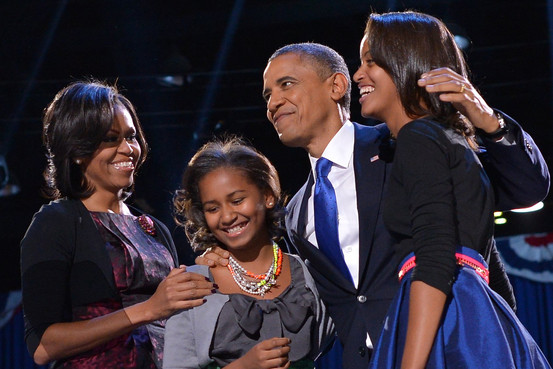
Congratulations President Barack Obama, 44th President of the United States of America


Today we congratulation President Barack Obama on winning a second presidential term.  Our prayers go up to God to provide wisdom, clarity, strength and protection for him and his family.


Thursday, April 19, 2012

Remembering the Nameless...


"I just sat in there for a moment and pondered the courage and tenacity that is part of our very recent history but is also part of that long line of folks who sometimes are nameless, oftentimes didn't make the history books, but who constantly insisted on their dignity, their share of the American dream"
President Barack Obama
April 18, 2012

Just before speaking at a fundraiser in Detroit yesterday, President Barack Obama was able to visit and reflect upon an iconic piece of civil rights history. The president told supporters at the Henry Ford Museum he was able to sit briefly on the bus made famous by activist Rosa Parks whose refusal to move from her seat for a white passenger sparked the Montgomery, Alabama bus boycott in 1955.

http://whitehouse.blogs.cnn.com/2012/04/19/potus-sits-on-bus-made-famous-by-rosa-parks/

Sunday, October 23, 2011

Civil Rights Leader, Rev. Fred L. Shuttlesworth

Rev Shuttlesworth in 2007
"I went to jail 30 or 40 times...for a good thing, trying to make a difference."

Rev. Fred L. Shuttlesworth


Reverend Fred L. Shuttlesworth, a former truck driver who studied religion at night, became pastor of Bethel Baptist Church in Birmingham, Ala., in 1953 and soon was an outspoken leader in the fight for racial equality. He survived a 1956 bombing, an assault during a 1957 demonstration, chest injuries when Birmingham authorities turned fire hoses on demonstrators in 1963, and countless arrests. In his 1963 book "Why We Can't Wait," King called Shuttlesworth "one of the nation's the most courageous freedom fighters ... a wiry, energetic and indomitable man." "When God made Bull Connor, one of the real negative forces in this country, He was sure to make Fred Shuttlesworth." Lowery said Wednesday.

"I didn't give a slap happy about what anybody thought about me"
Fred Shuttleworth in 2010


"My church was a beehive," Shuttlesworth once said. "I made the movement. I made the challenge. Birmingham was the citadel of segregation, and the people wanted to march."
Shuttlesworth was born March 18, 1922, near Montgomery and grew up in Birmingham.  As a child, he knew he would either be a minister or a doctor and by 1943, he decided to enter the ministry. He began taking theological courses at night while working as a truck driver and cement worker during the day. He was licensed to preach in 1944 and ordained in 1948.

On December 25, 1956, unknown persons tried to kill Shuttlesworth by placing sixteen sticks of dynamite under his bedroom window. Shuttlesworth somehow escaped unhurt even though his house was heavily damaged. A police officer, who also belonged to the Ku Klux Klan, told Shuttlesworth as he came out of his home, "If I were you I'd get out of town as quick as I could". Shuttlesworth told him to tell the Klan that he was not leaving and 
"I wasn't saved to run."  The next day, Shuttlesworth led 250 people in a protest of segregation on buses in Birmingham.

In 1957, he was beaten by a mob when he tried to enroll two of his children in an all-white school in Birmingham.  In the early 1960s, Shuttlesworth had invited King back to Birmingham. Televised scenes of police dogs and fire hoses being turned on black marchers, including children, in spring 1963 helped the rest of the nation grasp the depth of racial animosity in the Deep South.  Shuttlesworth participated in the sit-ins against segregated lunch counters in 1960 and took part in the organization and completion of the Freedom Rides in 1961.


Shuttlesworth(Left) with Abernathy and Dr. King in 1963

Shuttlesworth invited SCLC and Dr. King to come to Birmingham in 1963 to lead the campaign to desegregate it through mass demonstrations–what Shuttlesworth called "Project C", the "C" standing for "confrontation". While Shuttlesworth was willing to negotiate with political and business leaders for peaceful abandonment of segregation, he believed, with good reason, that they would not take any steps that they were not forced to take. He suspected their promises could not be trusted on until they acted on them.

One of the 1963 demonstrations he led resulted in Shuttlesworth's being convicted of parading without a permit from the City Commission. On appeals the case reached the US Supreme Court. In its 1969 decision of Shuttlesworth v. Birmingham, the Supreme Court reversed Shuttlesworth's conviction. They determined circumstances indicated that the parade permit was denied not to control traffic, as the state contended, but to censor ideas.

In 1963 Shuttlesworth was set on provoking a crisis that would force the authorities and business leaders to recalculate the cost of segregation. He was helped immeasurably by Eugene "Bull" Connor, the Commissioner of Public Safety and most powerful public official in Birmingham, who used Klan groups to heighten violence against blacks in the city. Even as the business class was beginning to see the end of segregation, Connor was determined to maintain it. Referring to the city's notoriously racist safety commissioner, Shuttlesworth would tell followers, "We're telling ol' 'Bull' Connor right here tonight that we're on the march and we're not going to stop marching until we get our rights."
Shuttleworth Statue, Birmingham Civil Rights Institute

While Connor's direct police tactics intimidated black citizens of Birmingham, they also created a split between Connor and the business leaders. They resented both the damage Connor was doing to Birmingham's image around the world and his high-handed attitude toward them.  According to a May 1963 New York Times profile of Shuttlesworth, Connor responded to the word Shuttlesworth had been injured by the spray of fire hoses by saying: "I'm sorry I missed it. ... I wish they'd carried him away in a hearse."

Similarly, while Connor may have benefited politically in the short run from Shuttlesworth's determined provocations, that also fit Shuttleworth's long-term plans. The televised images of Connor's directing handlers of police dogs to attack unarmed demonstrators and firefighters' using hoses to knock down children had a profound effect on American citizens' view of the civil rights struggle.  

Shuttlesworth's activities were not limited to Birmingham. In 1964 he traveled to St. Augustine, Florida (which he often cited as the place where the civil rights struggle met with the most violent resistance), taking part in marches and widely publicized beach wade-ins that led directly to the passage of the landmark Civil Rights Act of 1964. In 1965 Shuttlesworth he was also active in Selma, Alabama, and the march from Selma to Montgomery that led to the passage of the Voting Rights Act of 1965.

In 1978, Shuttlesworth was portrayed by Roger Robinson in the television miniseries King.Shuttlesworth founded the "Shuttlesworth Housing Foundation" in 1988 to assist families who might otherwise be unable to buy their own homes. Shuttlesworth was was a key figure in Spike Lee's 1997 documentary, "4 Little Girls," about the September 1963 Birmingham church bombing that killed four black children. He also gained attention in Diane McWhorter's book "Carry Me Home: Birmingham, Alabama: The Climactic Battle of the Civil Rights Revolution," which won a Pulitzer Prize in 2002. On July 16, 2008, the Birmingham, Alabama, Airport Authority approved changing the name of the Birmingham's airport in honor of Shuttlesworth. On October 27, 2008, the airport was officially changed to Birmingham-Shuttlesworth International Airport
Shuttlesworth & Sen Obama
In 2007 Obama pushed Shuttlesworth's wheelchair across the Edmund Pettus Bridge in Selma during a commemoration of the Selma-to-Montgomery voting rights march in which club-swinging troopers and deputies beat and turned back marchers at the Edmund Pettus bridge at Selma on March 7, 1965, an attack that became known as "Bloody Sunday" and helped galvanize national support for the voting rights movement.  In November 2008, Shuttlesworth watched from a hospital bed as Senator Barack Obama was elected the nation's first African-American president. 

On October 5, 2011, Shuttlesworth passed away at the age of 89 in his hometown of Birmingham, Alabama. The Birmingham Civil Rights Institute announced that it intends to include Shuttlesworth's burial site on the Civil Rights History Trail.  

When Rev. Shuttlesworth retired as the pastor of Greater New Light in 2006 at the age of 84, he said in his final sermon:

Thursday, January 20, 2011

President Obama and His Family Make History

On January 20 in Black History...

"Let it be said by our children's children that ...with eyes fixed on the horizon and God's grace upon us, we carried forth that great gift of freedom and delivered it safely to future generations."
President Barack Obama

In 2009 President Barack Obama was inaugurated as the 44th president of the United States and the first African-American president of the United States.  Scroll down for full text of inauguration speech below.  President Obama is the first native Hawaiin to serve as president.  In 2009, he was awarded the Nobel Peace Prize.  He is a graduate of Columbia University and Harvard Law School.  Prior to his political career as senator and now president, he worked as a community organizer, a civil rights attorney and a professor of constitutional law at the University of Chicago Law School.

"'I'm a Christian by choice...also understanding that Jesus Christ dying for my sins spoke to the humility we allhave to have as human beings, that we're sinful and we're flawed and we make mistakes, and that we achieve salvation through the grace of God" President Barack Obama, 9/28/10
http://blogs.abcnews.com/politicalpunch/2010/09/president-obama-i-am-a-christian-by-choicethe-precepts-of-jesus-spoke-to-me.html


Where are we two years later?

 Well there's been alot of debate about this question, but here are a few highlights for now...
  • The first bill signed into law by President Obama was the Lilly Ledbetter Fair Pay Act of 2009, relaxing the statute of limitations for equal-pay lawsuits. Five days later, he signed the reauthorization of the State Children's Health Insurance Program (SCHIP) to cover an additional 4 million children currently uninsured.  President Obama has appointed two women to serve on the Supreme Court in the first two years of his Presidency - Sonia Sotomayor and Elena Kagan.
  • In the first quarter of 2010, the U.S. economy expanded at a 2.7% pace after growing at its fastest rate in six years in the fourth quarter, 5.7%. In July 2010, the Federal Reserve expressed that although economic activity continued to increase, its pace had slowed and its Chairman, Ben Bernanke, stated that the economic outlook was "unusually uncertain."
  • Stay tuned for more to come tomorrow...


Where were you when President Obama was sworn in?


I was working on a client in Anchorage, so I took the day off and watched the inauguration at the University of Alaska at Anchorage with friends.  As part of their Civil Rights Month celebration, UAA was showing the inauguration on the big screen in the auditorium of their student union.  There were hundreds of people in attendance and we all participated as if we were there….standing, applauding laughing and even crying. They also provided reflection cards for attendees to write down their reflections on what the day meant to them so they could display them all as part of the Alaska Civil Rights Exhibit later in the month. Later that night there were celebration parties/balls around Anchorage.


Inaugural Address
January 20, 2009
By President Barack Hussein Obama


My fellow citizens: I stand here today humbled by the task before us, grateful for the trust you've bestowed, mindful of the sacrifices borne by our ancestors.


I thank President Bush for his service to our nation -- (applause) -- as well as the generosity and cooperation he has shown throughout this transition.


Forty-four Americans have now taken the presidential oath. The words have been spoken during rising tides of prosperity and the still waters of peace. Yet, every so often, the oath is taken amidst gathering clouds and raging storms. At these moments, America has carried on not simply because of the skill or vision of those in high office, but because we, the people, have remained faithful to the ideals of our forebears and true to our founding documents.


So it has been; so it must be with this generation of Americans.


That we are in the midst of crisis is now well understood. Our nation is at war against a far-reaching network of violence and hatred. Our economy is badly weakened, a consequence of greed and irresponsibility on the part of some, but also our collective failure to make hard choices and prepare the nation for a new age. Homes have been lost, jobs shed, businesses shuttered. Our health care is too costly, our schools fail too many -- and each day brings further evidence that the ways we use energy strengthen our adversaries and threaten our planet.


These are the indicators of crisis, subject to data and statistics. Less measurable, but no less profound, is a sapping of confidence across our land; a nagging fear that America's decline is inevitable, that the next generation must lower its sights.


Today I say to you that the challenges we face are real. They are serious and they are many. They will not be met easily or in a short span of time. But know this America: They will be met. (Applause.)


On this day, we gather because we have chosen hope over fear, unity of purpose over conflict and discord. On this day, we come to proclaim an end to the petty grievances and false promises, the recriminations and worn-out dogmas that for far too long have strangled our politics. We remain a young nation. But in the words of Scripture, the time has come to set aside childish things. The time has come to reaffirm our enduring spirit; to choose our better history; to carry forward that precious gift, that noble idea passed on from generation to generation: the God-given promise that all are equal, all are free, and all deserve a chance to pursue their full measure of happiness. (Applause.)


In reaffirming the greatness of our nation we understand that greatness is never a given. It must be earned. Our journey has never been one of short-cuts or settling for less. It has not been the path for the faint-hearted, for those that prefer leisure over work, or seek only the pleasures of riches and fame. Rather, it has been the risk-takers, the doers, the makers of things -- some celebrated, but more often men and women obscure in their labor -- who have carried us up the long rugged path towards prosperity and freedom.


For us, they packed up their few worldly possessions and traveled across oceans in search of a new life. For us, they toiled in sweatshops, and settled the West, endured the lash of the whip, and plowed the hard earth. For us, they fought and died in places like Concord and Gettysburg, Normandy and Khe Sahn.


Time and again these men and women struggled and sacrificed and worked till their hands were raw so that we might live a better life. They saw America as bigger than the sum of our individual ambitions, greater than all the differences of birth or wealth or faction.


This is the journey we continue today. We remain the most prosperous, powerful nation on Earth. Our workers are no less productive than when this crisis began. Our minds are no less inventive, our goods and services no less needed than they were last week, or last month, or last year. Our capacity remains undiminished. But our time of standing pat, of protecting narrow interests and putting off unpleasant decisions -- that time has surely passed. Starting today, we must pick ourselves up, dust ourselves off, and begin again the work of remaking America.
For everywhere we look, there is work to be done. The state of our economy calls for action, bold and swift. And we will act, not only to create new jobs, but to lay a new foundation for growth. We will build the roads and bridges, the electric grids and digital lines that feed our commerce and bind us together. We'll restore science to its rightful place, and wield technology's wonders to raise health care's quality and lower its cost. We will harness the sun and the winds and the soil to fuel our cars and run our factories. And we will transform our schools and colleges and universities to meet the demands of a new age. All this we can do. All this we will do.
Now, there are some who question the scale of our ambitions, who suggest that our system cannot tolerate too many big plans. Their memories are short, for they have forgotten what this country has already done, what free men and women can achieve when imagination is joined to common purpose, and necessity to courage. What the cynics fail to understand is that the ground has shifted beneath them, that the stale political arguments that have consumed us for so long no longer apply.
The question we ask today is not whether our government is too big or too small, but whether it works -- whether it helps families find jobs at a decent wage, care they can afford, a retirement that is dignified. Where the answer is yes, we intend to move forward. Where the answer is no, programs will end. And those of us who manage the public's dollars will be held to account, to spend wisely, reform bad habits, and do our business in the light of day, because only then can we restore the vital trust between a people and their government.
Nor is the question before us whether the market is a force for good or ill. Its power to generate wealth and expand freedom is unmatched. But this crisis has reminded us that without a watchful eye, the market can spin out of control. The nation cannot prosper long when it favors only the prosperous. The success of our economy has always depended not just on the size of our gross domestic product, but on the reach of our prosperity, on the ability to extend opportunity to every willing heart -- not out of charity, but because it is the surest route to our common good.
As for our common defense, we reject as false the choice between our safety and our ideals. Our Founding Fathers -- (applause) -- our Founding Fathers, faced with perils that we can scarcely imagine, drafted a charter to assure the rule of law and the rights of man -- a charter expanded by the blood of generations. Those ideals still light the world, and we will not give them up for expedience sake.
And so, to all the other peoples and governments who are watching today, from the grandest capitals to the small village where my father was born, know that America is a friend of each nation, and every man, woman and child who seeks a future of peace and dignity. And we are ready to lead once more.
Recall that earlier generations faced down fascism and communism not just with missiles and tanks, but with the sturdy alliances and enduring convictions. They understood that our power alone cannot protect us, nor does it entitle us to do as we please. Instead they knew that our power grows through its prudent use; our security emanates from the justness of our cause, the force of our example, the tempering qualities of humility and restraint.
We are the keepers of this legacy. Guided by these principles once more we can meet those new threats that demand even greater effort, even greater cooperation and understanding between nations. We will begin to responsibly leave Iraq to its people and forge a hard-earned peace in Afghanistan. With old friends and former foes, we'll work tirelessly to lessen the nuclear threat, and roll back the specter of a warming planet.
We will not apologize for our way of life, nor will we waver in its defense. And for those who seek to advance their aims by inducing terror and slaughtering innocents, we say to you now that our spirit is stronger and cannot be broken -- you cannot outlast us, and we will defeat you.
For we know that our patchwork heritage is a strength, not a weakness. We are a nation of Christians and Muslims, Jews and Hindus, and non-believers. We are shaped by every language and culture, drawn from every end of this Earth; and because we have tasted the bitter swill of civil war and segregation, and emerged from that dark chapter stronger and more united, we cannot help but believe that the old hatreds shall someday pass; that the lines of tribe shall soon dissolve; that as the world grows smaller, our common humanity shall reveal itself; and that America must play its role in ushering in a new era of peace.
To the Muslim world, we seek a new way forward, based on mutual interest and mutual respect. To those leaders around the globe who seek to sow conflict, or blame their society's ills on the West, know that your people will judge you on what you can build, not what you destroy.
To those who cling to power through corruption and deceit and the silencing of dissent, know that you are on the wrong side of history, but that we will extend a hand if you are willing to unclench your fist.
To the people of poor nations, we pledge to work alongside you to make your farms flourish and let clean waters flow; to nourish starved bodies and feed hungry minds. And to those nations like ours that enjoy relative plenty, we say we can no longer afford indifference to the suffering outside our borders, nor can we consume the world's resources without regard to effect. For the world has changed, and we must change with it.
As we consider the role that unfolds before us, we remember with humble gratitude those brave Americans who at this very hour patrol far-off deserts and distant mountains. They have something to tell us, just as the fallen heroes who lie in Arlington whisper through the ages.
We honor them not only because they are the guardians of our liberty, but because they embody the spirit of service -- a willingness to find meaning in something greater than themselves.
And yet at this moment, a moment that will define a generation, it is precisely this spirit that must inhabit us all. For as much as government can do, and must do, it is ultimately the faith and determination of the American people upon which this nation relies. It is the kindness to take in a stranger when the levees break, the selflessness of workers who would rather cut their hours than see a friend lose their job which sees us through our darkest hours. It is the firefighter's courage to storm a stairway filled with smoke, but also a parent's willingness to nurture a child that finally decides our fate.
Our challenges may be new. The instruments with which we meet them may be new. But those values upon which our success depends -- honesty and hard work, courage and fair play, tolerance and curiosity, loyalty and patriotism -- these things are old. These things are true. They have been the quiet force of progress throughout our history.
What is demanded, then, is a return to these truths. What is required of us now is a new era of responsibility -- a recognition on the part of every American that we have duties to ourselves, our nation and the world; duties that we do not grudgingly accept, but rather seize gladly, firm in the knowledge that there is nothing so satisfying to the spirit, so defining of our character than giving our all to a difficult task.
This is the price and the promise of citizenship. This is the source of our confidence -- the knowledge that God calls on us to shape an uncertain destiny. This is the meaning of our liberty and our creed, why men and women and children of every race and every faith can join in celebration across this magnificent mall; and why a man whose father less than 60 years ago might not have been served in a local restaurant can now stand before you to take a most sacred oath.
So let us mark this day with remembrance of who we are and how far we have traveled. In the year of America's birth, in the coldest of months, a small band of patriots huddled by dying campfires on the shores of an icy river. The capital was abandoned. The enemy was advancing. The snow was stained with blood. At the moment when the outcome of our revolution was most in doubt, the father of our nation ordered these words to be read to the people:
"Let it be told to the future world...that in the depth of winter, when nothing but hope and virtue could survive... that the city and the country, alarmed at one common danger, came forth to meet [it]."
America: In the face of our common dangers, in this winter of our hardship, let us remember these timeless words. With hope and virtue, let us brave once more the icy currents, and endure what storms may come. Let it be said by our children's children that when we were tested we refused to let this journey end, that we did not turn back nor did we falter; and with eyes fixed on the horizon and God's grace upon us, we carried forth that great gift of freedom and delivered it safely to future generations.


Thank you. God bless you. And God bless the United States of America.


You may also enjoy...

Related Posts Plugin for WordPress, Blogger...

EH Canvas Spotlight - Flow by Monica Stewart

EH Canvas Spotlight - Flow by Monica Stewart
Flow by Monica Stewart