Showing posts with label Ghana. Show all posts

Tuesday, December 25, 2012

Merry Christmas around the Diaspora

Here's wishing you all a very Merry Christmas from Experiencing History!

Swazi Flag Christmas Ornament
How to say Merry Christmas in several African countries:
In Akan (Ghana) Afishapa
In Zimbabwe Merry Kisimusi
In Afrikaans (South Africa) Geseënde Kersfees
In Zulu (South Africa) Sinifisela Ukhisimusi Omuhle
In Swazi (Swaziland) Sinifisela Khisimusi Lomuhle
In Sotho (Lesthoto) Matswalo a Morena a Mabotse
In Swahili (Tanzania, Kenya) Kuwa na Krismasi njema
In Amharic (Ethiopia) Melkam Yelidet Beaal
In Egyptian (Egypt) Colo sana wintom tiebeen
In Yoruba (Nigeria) E ku odun, e hu iye' dun!


While most of us in America will be eating a traditional American Christmas meal of turkey or hen or ham...here's what some will be eating across the diaspora:

A traditional Christmas meal in Ghana:
The traditional Christmas Eve Dinner consists either of a specially cooked rice and goat or chicken stew or soup and is eaten before the Annual Christmas Worship Service and all friends and relatives as well as strangers are invited. The food consumed at the Christmas Day dinners may include rice, chicken, goat, lamb, and fruits of various kinds. There may be mangoes, oranges, pawpaw or cashew fruits. The families always brightly decorate the houses with beautiful paper ornaments specially made for the occasion. A tree in the center of the courtyard is also decorated. It may be a mango tree or a guava tree or a cashew tree. Usually the children and the young people in each family do this. Not only homes but also schools and neighborhoods are brightly decorated with colorful crepe paper while we look forward to the Christmas Eve Services at the various churches.  Read more about Christmas in Ghana here:  http://home.roadrunner.com/~osofo/afishapa.htm

Christmas in Nigeria
In Yoruba, meals usually consist of Iyan (pounded yam) eba or amala, served over with peppery stewed vegetables. Inevitably people find themselves eating this meal three to four times a day, due to visiting family and friends and being offered this tradition meal in their houses. In Yoruba it is frowned upon and is very rude to decline food upon offering.

There are many other dishes well prepared on Christmas Eve. A chicken and rice stew, similar to an Indian curry stew. Some families would prepare a delicacy called Moin-moin; which is blended black eyed beans, mixed with vegetable oil and diced liver, prawns, chicken, fish and beef. This fulfilling mouth watering concoction is then wrapped inside large leaves and steamed until cooked.

On Christmas day almost everyone attends church. It is tradition to decorate churches, homes and compounds with woven and unwoven palm fronds, Christmas trees and Christmas lights. There is lots of energy in the streets; festive jubilation's consist of loud crackling of an array of firework displays, luminous starry fire crackers going off. Colorful tradition masquerades on stilts parade around the events. Of course everyone have their best clothes on and children mill around playing amongst the fun.  Read more about Christmas in Nigeria here:  http://www.celebratingchristmas.co.uk/index.php?id=christmas-in-nigeria

Christmas letter to my Motherland, Nigeria by Azuka Onwuka
"your inner strength is amazing, Great Mother. In spite of all the injuries and pains inflicted upon you, you remain strong. .... You have looked on in faith that some day it will be well with your home. You have remained hopeful that one day, your children will make you a proud mother....May it be well with you, Mother, in the morning. May it be well with you in the afternoon. May it be well with you at night. May your children who don't wish you well have a change of heart. May there be justice, peace and laughter in your home....As this year winds down, may 2013 usher in a new phase for you: a phase of peace, growth, prosperity and happiness. Merry Christmas to a special and longsuffering Mother. It shall be well with you, Nigeria!"

Sunday, December 9, 2012

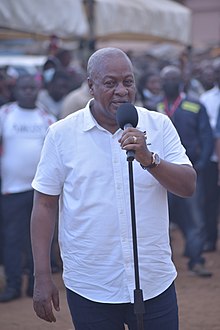
John Mahama declared winners of Ghana's Presidential Election

John Mahama, President of Ghana
Today's Ghana election results were announced.  John Mahama was declared the President of Ghana  Mahama took office in July after the unexpected death of President John Atta Mills.

John Dramani Mahama (/məˈhɑːmə/; born 29 November 1958) is a Ghanaian politician who has been President of Ghana since July 2012. He was the Vice President of Ghana from 2009 to 2012, and he took office as President on 24 July 2012 following the death of his predecessor, President John Atta Mills. He was re-elected in December 2012 following an election tainted by opposition claims of widespread fraud on the part of the Election Commission. A respected communications expert, historian, and writer, Mahama was a Member of Parliament from 1997 to 2009 and Minister of Communications from 1998 to 2001.

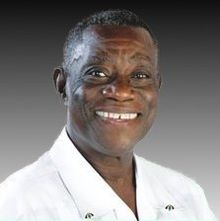
John Evans Fiifi Atta Mills
John Evans Fiifi Atta Mills (21 July 1944 – 24 July 2012) was a Ghanaian politician, a legal scholar and a tax expert who was President of Ghana from 2009 until his death in 2012. He was inaugurated on 7 January 2009, having defeated the ruling party candidate Nana Akufo-Addo in the 2008 election. He was vice-president from 1997 to 2001 under President Jerry Rawlings, and stood unsuccessfully in the 2000 and 2004 presidential elections as the candidate of the National Democratic Congress (NDC). He is the first Ghanaian Head of State to die in office.


http://www.bbc.co.uk/news/world-africa-20661599
http://www.ghanaweb.com/GhanaHomePage/NewsArchive/artikel.php?ID=258960

Official election results from ghanaweb.com:

Sunday, April 15, 2012

African Liberation Day


"Today we are one.  If in the past the Sahara divided us, now it unites us..." 
 Osageyfo Kwame Nkrumah
Conference of Independent African States, April 15, 1968

Ghana achieved independence from Britain on March 6, 1957 but Prime Minister (later President) Osagefyo Dr Kwame Nkrumah believed that; "Ghana's freedom would be meaningless if it was not linked with the total liberation of the entire continent of Africa," or as Sekou Toure later put it "the liberty of Africa is indivisible."  For Nkrumah,

Africa was not, "and can never be an extension of Europe."  

"Africa must unite," Nkrumah concluded and, therefore, within a year of his country's Independence, proceeded to organize a meeting of African independent states to consider African liberation.  The states included Egypt which attained independence in 1922, Ethiopia (date unknown), Liberia (1847), Libya (1951), Morocco (1956), Sudan (1956), Tunisia (1956), Ghana (1957), which Nkrumah referred to as the "only eight independent truly African states.
On April 15, 1958, in the city of Accra, Ghana, African leaders and political activists gathered at the first Conference of Independent African States. It was attended by representatives of the governments of Egypt (which attended as part of the United Arab Republic), Ethiopia, Ghana, Liberia, Libya, Morocco, Sudan, Tunisia, and representatives of the National Liberation Front of Algeria, and the Union of the Peoples of Cameroon. The conference was significant in that it represented the first pan-African Conference held on African soil.
"After 500 years of the most brutal suffering known to humanity, the rape of Africa and the subsequent slave trade, which cost Africa in excess of 100,000,000 of her children, the masses of African People singularly, separately, individually, in small disconnected groupings for centuries had said, “enough”! But in 1958, at the Accra Conference, it was being said in ways that emphasized joint, coordinated and unified action. "   http://www.thetalkingdrum.com/ald.html


 The Conference called for the founding of African Freedom Day, a day to “mark each year the onward progress of the liberation movement, and to symbolize the determination of the People of Africa to free themselves from foreign domination and exploitation.”

"African Liberation Day for us is only an instrument to help organize our people..." 
Kwame Ture

Five years later, after the First Conference of Independent African States in the Ethiopian capital Addis Ababa, another historic meeting occurred. On May 25, 1963, leaders of thirty-two independent African States met to form the Organization of African Unity (OAU). By then more than two thirds of the continent had achieved independence, mostly from imperial European states. At this meeting, the date of Africa Freedom Day was changed from April 15 to May 25, and Africa Freedom Day was declared African Liberation Day (ALD). 

About Nkrumah 
The Rt. Hon. Dr. Kwame Nkrumah was the leader of Ghana and its predecessor state, the Gold Coast, from 1952 to 1966. Overseeing the nation's independence from British colonial rule in 1957, Nkrumah was the first President of Ghana and the first Prime Minister of Ghana. An influential 20th-century advocate of Pan-Africanism, he was a founding member of the Organization of African Unity and was the winner of the Lenin Peace Prize in 1963.


About Ghana
The word Ghana means Warrior King and was the title accorded to the kings of the medieval West African Ghana Empire.   There is archaeological evidence showing that humans have lived in present-day Ghana since the Bronze Age.   By the early 11th century, the Akan were firmly established in a state called Bonoman. From the 13th century, numerous groups emerged from what is believed to have been the Bonoman area, to create several Akan States, mainly based on gold trading. These states included Denkyira, Akwamu, and Akyem. The Ga and Dagomba states were established by the 16th century.  By the 19th century, most of modern Ghanaian territory was included in the Empire of Ashanti, one of the most influential states in sub-Saharan Africa prior to colonial rule. The Ashanti government operated first as a loose network, and eventually as a centralized kingdom with an advanced, highly specialized bureaucracy centered in Kumasi.
Flag of Ghana

Trade with European states began after contact with the Portuguese in the 15th century, and the British established the Gold Coast Crown colony in 1874 over parts but not all of the country.     The Gold Coast achieved independence from the United Kingdom in 1957, becoming the first sub-Saharan African nation to do so from European Colonialism. The name Ghana was chosen for the new nation to reflect the ancient Empire of Ghana, which once extended throughout much of west Africa.  The Flag of Ghana, became the new flag in 1957. Designed by, Theodosia Salome Okoh, the red represents the blood that was shed towards independence, the gold represents the mineral wealth of Ghana, the green symbolizes the rich agriculture, and the black star is the symbol of African emancipation.


Read more here:  http://www.aaprp-intl.org/index.html
http://africanliberationday.net/
http://allafrica.com/stories/201005240652.html
http://www.thetalkingdrum.com/ald.html
http://en.wikipedia.org/wiki/African_Liberation_Day
http://en.wikipedia.org/wiki/Kwame_Nkrumah

You may also enjoy...

Related Posts Plugin for WordPress, Blogger...

EH Canvas Spotlight - Flow by Monica Stewart

EH Canvas Spotlight - Flow by Monica Stewart
Flow by Monica Stewart