Showing posts with label african diaspora. Show all posts

Monday, March 3, 2014

Congrats to Lupita Nyong'o and 12 Years A Slave on their Oscar wins!

"When I look down at this golden statue, may it remind me and every little child that no matter where you're from, your dreams are valid" 
Lupita Nyong'o

Lupita Nyong'o accepting her Oscar
For her breakout performance in 12 Years a Slave, Lupita Nyong'o has won awards from the Screen Actors Guild, Independent Spirit Awards and the Critic Choice Awards.  Last night she capped it off with winning an Oscar for Best Supporting Actress.  If you haven't seen the movie, I will tell you that I held it together until one of the last scenes with her and Chiwetell...then I lost it.  The acting in that movie was phenomenal.


"It doesn't escape me for one moment that so much joy in my life is because of so much pain in someone else's" 
Lupita Nyong'o


"Everyone deserves not just to survive but to live. This is the most important legacy of Solomon Northup," 
Steve McQueen
Steve McQueen accepting his Oscar
12 Years a Slave made history as the first movie from a black director to win the Best Picture in the 86 years of the Oscars.  People of African descent have contributed to the world since the beginning of time.  It is always good to see any of those accomplishments celebrated in the world.

"This is for all the people who have endured slavery, and the 21 million people who still endure slavery today."  
Steve McQueen


http://www.reuters.com/article/2014/03/03/us-oscars-idUSBREA1P16O20140303


Saturday, April 13, 2013

The Wonderful Adventures of Mrs. Seacole

Jamaican born Mary Seacole was a nurse who many considered to be the heroine of the Crimean War. In fact, Seacole was widely known among the soldiers of the British Army as "Mother Seacole." She documented her adventures in her autobiography, "Wonderful Adventures of Mrs. Seacole in Many Lands."

Read more about Mary Seacole here: http://www.bbc.co.uk/history/historic_figures/seacole_mary.shtml

Tuesday, January 1, 2013

Creativity and Faith...Happy Kwanzaa


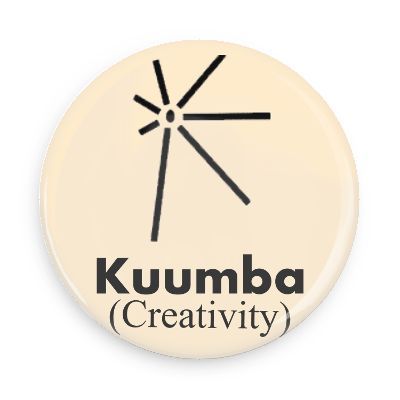
On the 6th day of Kwanzaa we celebrated Kuumba... Creativity.  We are encouraged to do always as much as we can, in the way that we can, in order to leave our community more beautiful and beneficial than when we inherited it.


Today on the 7th and final day of Kwanzaa we celebrate Imani...Faith.  Today we are reminded to believe with all of our heart in our people, our parents, our teachers, our leaders and the righteousness and victory of our struggle.


Find out more about Kwanzaa: http://www.officialkwanzaawebsite.org

Sunday, December 30, 2012

Nia...Purpose


On this 5th day of Kwanzaa we celebrate Nia, Purpose.  This day we focus on making our collective vocation the building and developing of our community in order to restore our people to their traditional greatness.

 Find out more about Kwanzaa: http://www.officialkwanzaawebsite.org

The Kwanzaa candles and harvest
Symbols of Kwanzaa

Saturday, December 29, 2012

Ujamaa... Cooperative Economics

On today this fourth day of Kwanzaa, we celebrate Ujamaa, Cooperative Economics. We are encouraged to build and maintain our own stores, shops and other businesses, and to profit from them together.

In the spirit of Ujamaa, I wanted to highlight a few black owned small businesses that I personally patron across the country.

Virtual Leap
Trinita McCormick, Owner
Raleigh, North Carolina
http://virtualleapvas.com/index.html
Virtual Leap is a virtual administrative professional company where we give you the JUMP on the competition! What is one of the biggest obstacles to overcome in the day of a business owner? They need more time to get everything accomplished! Our primary goal at Virtual LEAP is to free up more TIME in the day of small business owners, entrepreneurs and busy individuals to focus on true revenue generating activity. How do we create more time? We create more time by performing the administrative tasks that while necessary to support the business, do not alone generate profit for the business owner.

The Cookie Lady's Bakery & Cafe
Necola Adams, Owner
Merced, California
https://www.facebook.com/cookieladysbakery
Mrs. Adams is back, creating "COOKIES WITH AN ATTITUDE" as well as delicious lunch menu for dining in or carry out. You can even enjoy our most convenient free delivery service. MRS ADAMS has tried her recipes from MERCED to HOLLYWOOD, serving gourmet & deli delights to family, friends and to the STARS!!

Divine Creations Hair Designs

Kay Owens, CEO and Expert Stylist
Kesalynn Wiley, CFO
Tira Merrick (not the owner but my favorite stylist in the salon:) )
http://www.divinecreationshairdesigns.com
Divine Creations Hair Designs…the dream of two sisters, who turned their vision into reality.
Fifty years ago their grandmother, Lady Eloise, worked hard to open her first salon called Reed's Beauty Salon. It didn't take long for hair to become second nature to eldest sister, Kay, who spent her days growing up in the salon and attained a passion for it. Ten years later, Kay struck out on her own, knowing her younger sister shared the dream of running her own business and had a vision for success. With Kay's experience as an expert stylist and Kesalynn's (Kesa) education as a Finance major, the siblings collaborated and opened Divine Creations Hair Designs. Their goal was to offer unique services, otherwise lacking in other salons and open 7 Days a Week.  Together with each other's expertise, they generated a formula for success. Today, Divine Creations is a viable business ran and managed by Kay Owens, Expert Stylist & CEO and Kesalynn Wiley, middle sister & CFO. Thus, from the hard work of a grandmother, to the dream of sisters, through more hard work and prayer…they turned their vision into reality.

The Kwanzaa candles and harvest
Symbols of Kwanzaa
Find out more about Kwanzaa: http://www.officialkwanzaawebsite.org

Friday, December 28, 2012

Ujima...Collective Work and Responsibility


Today, on the third day of Kwanzaa, reflect on Ujima.

 
UJIMA
Ujima, pronounced "oo-GEE-mah" means Collective Work and Responsibility where we are encouraged to build and maintain our community together and make our brother's and sister's problems our problems and to solve them together.  This day reminds us of our obligation to the past, present and future, and that we have a role to play in the community, society, and world.


The Kwanzaa candles and harvest
Symbols of Kwanzaa

In the Symbols of Kwanzaa picture to the left, the crops are the Mazao which are symbolic of African harvest celebrations and of the rewards of productive and collective labor.


Find out more about Kwanzaa: http://www.officialkwanzaawebsite.org

Thursday, December 27, 2012

Kugichagula....Day of Self-Determination

The Kwanzaa candles and harvest
Symbols of Kwanzaa
Today is the second day of Kwanzaa where we focus on
Kugichagula which is Self-Determination.

In the Symbols of Kwanzaa picture to the right, the candle holder is the Kinara which is symbolic of our roots, our parent people -- continental Africans.


Kugichagula...Day of Self-Determination


Kugichagula, pronounced "koo-jee-cha-goo-LEE-ah" means to define ourselves, name ourselves, create for ourselves, and speak for ourselves.


Find out more about Kwanzaa: http://www.officialkwanzaawebsite.org

Wednesday, December 26, 2012

Umoja...Day of Unity

Happy Kwanzaa!!!

The Kwanzaa candles and harvest
Symbols of Kwanzaa
Today is the first day of Kwanzaa, an annual seven day cultural festival celebrating the African American people, their culture and their heritage.  Derived from the Swahili phrase "matunda ya kwanza" which means "first fruits", Kwanzaa has its roots in the ancient African first-fruit harvest celebrations. However, its modern history begins in 1966 when it was developed by Dr. Maulana Ron Karenga. Inspired by the civil rights struggles of the 1960's, Dr. Karenga conceived a holiday that would bring African Americans together in celebration of their black culture.  Each day of Kwanzaa represents the seven principles of Kwanzaa...the first is Umoja.

In the Symbols of Kwanzaa picture above, the cup is the Unity Cup or Kikombe cha Umoja, which is symbolic of the foundational principle and practice of unity which makes all else possible.
Kwanzaa

Umoja...Day of Unity

Umoja, pronounced "oo-MOE-jah", is a day of unity in which we are encouraged to strive for and maintain unity in the family, community, nation and race.  On Umoja, we are reminded that each member of the family, and by extension the community, is constituted by a web of interpersonal relationships. The health and possibilities of the family and community, therefore, is dependent upon the quality of relationship within the family and community.


Here is the link to the original Kwanzaa website:  http://www.officialkwanzaawebsite.org/index.shtml
Link to previous EH blogposts on Kwanzaa: http://experiencinghistory.blogspot.com/2010/12/kwanzaa-founded-in-1966-was.html

Tuesday, December 25, 2012

Merry Christmas around the Diaspora

Here's wishing you all a very Merry Christmas from Experiencing History!

Swazi Flag Christmas Ornament
How to say Merry Christmas in several African countries:
In Akan (Ghana) Afishapa
In Zimbabwe Merry Kisimusi
In Afrikaans (South Africa) Geseënde Kersfees
In Zulu (South Africa) Sinifisela Ukhisimusi Omuhle
In Swazi (Swaziland) Sinifisela Khisimusi Lomuhle
In Sotho (Lesthoto) Matswalo a Morena a Mabotse
In Swahili (Tanzania, Kenya) Kuwa na Krismasi njema
In Amharic (Ethiopia) Melkam Yelidet Beaal
In Egyptian (Egypt) Colo sana wintom tiebeen
In Yoruba (Nigeria) E ku odun, e hu iye' dun!


While most of us in America will be eating a traditional American Christmas meal of turkey or hen or ham...here's what some will be eating across the diaspora:

A traditional Christmas meal in Ghana:
The traditional Christmas Eve Dinner consists either of a specially cooked rice and goat or chicken stew or soup and is eaten before the Annual Christmas Worship Service and all friends and relatives as well as strangers are invited. The food consumed at the Christmas Day dinners may include rice, chicken, goat, lamb, and fruits of various kinds. There may be mangoes, oranges, pawpaw or cashew fruits. The families always brightly decorate the houses with beautiful paper ornaments specially made for the occasion. A tree in the center of the courtyard is also decorated. It may be a mango tree or a guava tree or a cashew tree. Usually the children and the young people in each family do this. Not only homes but also schools and neighborhoods are brightly decorated with colorful crepe paper while we look forward to the Christmas Eve Services at the various churches.  Read more about Christmas in Ghana here:  http://home.roadrunner.com/~osofo/afishapa.htm

Christmas in Nigeria
In Yoruba, meals usually consist of Iyan (pounded yam) eba or amala, served over with peppery stewed vegetables. Inevitably people find themselves eating this meal three to four times a day, due to visiting family and friends and being offered this tradition meal in their houses. In Yoruba it is frowned upon and is very rude to decline food upon offering.

There are many other dishes well prepared on Christmas Eve. A chicken and rice stew, similar to an Indian curry stew. Some families would prepare a delicacy called Moin-moin; which is blended black eyed beans, mixed with vegetable oil and diced liver, prawns, chicken, fish and beef. This fulfilling mouth watering concoction is then wrapped inside large leaves and steamed until cooked.

On Christmas day almost everyone attends church. It is tradition to decorate churches, homes and compounds with woven and unwoven palm fronds, Christmas trees and Christmas lights. There is lots of energy in the streets; festive jubilation's consist of loud crackling of an array of firework displays, luminous starry fire crackers going off. Colorful tradition masquerades on stilts parade around the events. Of course everyone have their best clothes on and children mill around playing amongst the fun.  Read more about Christmas in Nigeria here:  http://www.celebratingchristmas.co.uk/index.php?id=christmas-in-nigeria

Christmas letter to my Motherland, Nigeria by Azuka Onwuka
"your inner strength is amazing, Great Mother. In spite of all the injuries and pains inflicted upon you, you remain strong. .... You have looked on in faith that some day it will be well with your home. You have remained hopeful that one day, your children will make you a proud mother....May it be well with you, Mother, in the morning. May it be well with you in the afternoon. May it be well with you at night. May your children who don't wish you well have a change of heart. May there be justice, peace and laughter in your home....As this year winds down, may 2013 usher in a new phase for you: a phase of peace, growth, prosperity and happiness. Merry Christmas to a special and longsuffering Mother. It shall be well with you, Nigeria!"

Tuesday, December 18, 2012

Zuma Retains ANC Leadership

Jacob Zuma re-elected head of ANC
Jacob Zuma
South Africa's populist but often criticized president has been re-elected head of the ruling party, which makes him likely to win another term as the nation's leader in 2014. Delegates of the African National Congress voted overwhelmingly for five more years of Jacob Zuma.  Read more here:  http://www.voanews.com/content/south-africas-zuma-retains-anc-leadership/1567060.html

Sunday, December 9, 2012

John Mahama declared winners of Ghana's Presidential Election

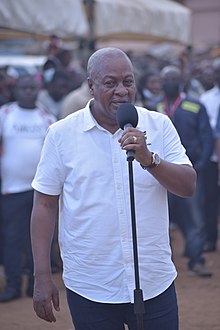
John Mahama, President of Ghana
Today's Ghana election results were announced.  John Mahama was declared the President of Ghana  Mahama took office in July after the unexpected death of President John Atta Mills.

John Dramani Mahama (/məˈhɑːmə/; born 29 November 1958) is a Ghanaian politician who has been President of Ghana since July 2012. He was the Vice President of Ghana from 2009 to 2012, and he took office as President on 24 July 2012 following the death of his predecessor, President John Atta Mills. He was re-elected in December 2012 following an election tainted by opposition claims of widespread fraud on the part of the Election Commission. A respected communications expert, historian, and writer, Mahama was a Member of Parliament from 1997 to 2009 and Minister of Communications from 1998 to 2001.

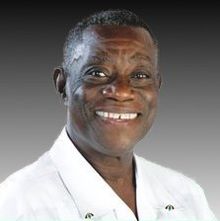
John Evans Fiifi Atta Mills
John Evans Fiifi Atta Mills (21 July 1944 – 24 July 2012) was a Ghanaian politician, a legal scholar and a tax expert who was President of Ghana from 2009 until his death in 2012. He was inaugurated on 7 January 2009, having defeated the ruling party candidate Nana Akufo-Addo in the 2008 election. He was vice-president from 1997 to 2001 under President Jerry Rawlings, and stood unsuccessfully in the 2000 and 2004 presidential elections as the candidate of the National Democratic Congress (NDC). He is the first Ghanaian Head of State to die in office.


http://www.bbc.co.uk/news/world-africa-20661599
http://www.ghanaweb.com/GhanaHomePage/NewsArchive/artikel.php?ID=258960

Official election results from ghanaweb.com:

Tuesday, July 17, 2012

Black Media Denied Access to the Olympics?

“After careful consideration by the Media Accreditation Committee, we regret to inform you that your application accreditation for the London 2012 Olympic Games has been unsuccessful,”
read the letter received by The Voice from the British Olympics Association. 

The Voice, Britain's oldest and biggest black newspaper, has been denied accreditation to the Olympic stadium despite the high number of black British athletes competing in the games.
Sports Editor Rodney Hinds says the decision was taken by the board of the British Olympics Association and “to his knowledge there are no black people on that board.” In an interview with The Grio, Hinds says it important for The Voice to get access because the stadium is the main venue for track and field.

The Voice was founded in 1982 by Jamaican-born accountant Val McCalla. Over the past 30 years, it has been an important training ground for minority journalists, where novice writers are given the opportunity to cut their teeth and develop before landing coveted Fleet Street or broadcast journalist jobs. High-profile black British journalists, such as Rageh Omaar and Dotun Adabayo, have all passed through the paper.

There’s no indication at this stage that there’s been a deliberate attempt to exclude the paper explicitly because of the nature of its readership. But having a publication like The Voice kept outside the stadium when members of Team GB come from the very communities it represents is unacceptable.

Activist and poet Zita Holbourne has set up a petition calling on the BOA to reconsider its decision.  Labour MP David Lammy, Jamaica's high commissioner Aloun Assamba and Simon Woolley, chair of Operation Black Vote, have also called for the decision to be reversed.

 
To sign the online petition, http://www.change.org/petitions/give-the-voice-media-accreditation-for-london-2012-olympics.


"We must acknowledge the value of Black media here in the US and abroad.  It is critical that throughout the African diaspora, we tell our own stories in our own voice our own way."  CGL


Read more here:
http://www.voice-online.co.uk/
http://thegrio.com/2012/07/17/the-voice-silenced-britains-largest-black-newspaper-barred-from-olympic-stadium/

http://www.newstatesman.com/blogs/media/2012/07/voice-denied-accreditation-olympic-stadium

Sunday, April 15, 2012

African Liberation Day


"Today we are one.  If in the past the Sahara divided us, now it unites us..." 
 Osageyfo Kwame Nkrumah
Conference of Independent African States, April 15, 1968

Ghana achieved independence from Britain on March 6, 1957 but Prime Minister (later President) Osagefyo Dr Kwame Nkrumah believed that; "Ghana's freedom would be meaningless if it was not linked with the total liberation of the entire continent of Africa," or as Sekou Toure later put it "the liberty of Africa is indivisible."  For Nkrumah,

Africa was not, "and can never be an extension of Europe."  

"Africa must unite," Nkrumah concluded and, therefore, within a year of his country's Independence, proceeded to organize a meeting of African independent states to consider African liberation.  The states included Egypt which attained independence in 1922, Ethiopia (date unknown), Liberia (1847), Libya (1951), Morocco (1956), Sudan (1956), Tunisia (1956), Ghana (1957), which Nkrumah referred to as the "only eight independent truly African states.
On April 15, 1958, in the city of Accra, Ghana, African leaders and political activists gathered at the first Conference of Independent African States. It was attended by representatives of the governments of Egypt (which attended as part of the United Arab Republic), Ethiopia, Ghana, Liberia, Libya, Morocco, Sudan, Tunisia, and representatives of the National Liberation Front of Algeria, and the Union of the Peoples of Cameroon. The conference was significant in that it represented the first pan-African Conference held on African soil.
"After 500 years of the most brutal suffering known to humanity, the rape of Africa and the subsequent slave trade, which cost Africa in excess of 100,000,000 of her children, the masses of African People singularly, separately, individually, in small disconnected groupings for centuries had said, “enough”! But in 1958, at the Accra Conference, it was being said in ways that emphasized joint, coordinated and unified action. "   http://www.thetalkingdrum.com/ald.html


 The Conference called for the founding of African Freedom Day, a day to “mark each year the onward progress of the liberation movement, and to symbolize the determination of the People of Africa to free themselves from foreign domination and exploitation.”

"African Liberation Day for us is only an instrument to help organize our people..." 
Kwame Ture

Five years later, after the First Conference of Independent African States in the Ethiopian capital Addis Ababa, another historic meeting occurred. On May 25, 1963, leaders of thirty-two independent African States met to form the Organization of African Unity (OAU). By then more than two thirds of the continent had achieved independence, mostly from imperial European states. At this meeting, the date of Africa Freedom Day was changed from April 15 to May 25, and Africa Freedom Day was declared African Liberation Day (ALD). 

About Nkrumah 
The Rt. Hon. Dr. Kwame Nkrumah was the leader of Ghana and its predecessor state, the Gold Coast, from 1952 to 1966. Overseeing the nation's independence from British colonial rule in 1957, Nkrumah was the first President of Ghana and the first Prime Minister of Ghana. An influential 20th-century advocate of Pan-Africanism, he was a founding member of the Organization of African Unity and was the winner of the Lenin Peace Prize in 1963.


About Ghana
The word Ghana means Warrior King and was the title accorded to the kings of the medieval West African Ghana Empire.   There is archaeological evidence showing that humans have lived in present-day Ghana since the Bronze Age.   By the early 11th century, the Akan were firmly established in a state called Bonoman. From the 13th century, numerous groups emerged from what is believed to have been the Bonoman area, to create several Akan States, mainly based on gold trading. These states included Denkyira, Akwamu, and Akyem. The Ga and Dagomba states were established by the 16th century.  By the 19th century, most of modern Ghanaian territory was included in the Empire of Ashanti, one of the most influential states in sub-Saharan Africa prior to colonial rule. The Ashanti government operated first as a loose network, and eventually as a centralized kingdom with an advanced, highly specialized bureaucracy centered in Kumasi.
Flag of Ghana

Trade with European states began after contact with the Portuguese in the 15th century, and the British established the Gold Coast Crown colony in 1874 over parts but not all of the country.     The Gold Coast achieved independence from the United Kingdom in 1957, becoming the first sub-Saharan African nation to do so from European Colonialism. The name Ghana was chosen for the new nation to reflect the ancient Empire of Ghana, which once extended throughout much of west Africa.  The Flag of Ghana, became the new flag in 1957. Designed by, Theodosia Salome Okoh, the red represents the blood that was shed towards independence, the gold represents the mineral wealth of Ghana, the green symbolizes the rich agriculture, and the black star is the symbol of African emancipation.


Read more here:  http://www.aaprp-intl.org/index.html
http://africanliberationday.net/
http://allafrica.com/stories/201005240652.html
http://www.thetalkingdrum.com/ald.html
http://en.wikipedia.org/wiki/African_Liberation_Day
http://en.wikipedia.org/wiki/Kwame_Nkrumah

You may also enjoy...

Related Posts Plugin for WordPress, Blogger...

EH Canvas Spotlight - Flow by Monica Stewart

EH Canvas Spotlight - Flow by Monica Stewart
Flow by Monica Stewart