Showing posts with label african-american women. Show all posts

Thursday, May 29, 2014

Black Women Leading the World

 Forbes released their list of the 100 most powerful women list.  10 Black women from across the diaspora made the list.

Ursula Burns, Xerox CEO

Among them were Joyce Banda, Ursurla Burns, Ngozi Okonjo-Iweala, Folorunsho Alakija, Michelle Obama, BeyoncĂ©, Oprah Winfrey, Ellen Johnson-Sirleaf, Ertharin Cousin and Helen Gaye. B

Wednesday, January 8, 2014

How It Feels To Be Colored Me....Zora Neale Hurston

Zora Neale Hurston
"BUT I AM NOT tragically colored. There is no great sorrow dammed up in my soul, nor lurking behind my eyes. I do not mind at all.....No, I do not weep.....I am too busy sharpening my oyster knife."  Zora Neale Hurston


Google's 1/7/14 Doodle of the Day

Yesterday, January 7, we celebrated the birthday of Zora Neale Hurston. She was even featured as Google's doodle of the day. You can read more about Zora on her official website, http://zoranealehurston.com/. You can know more about her, however, by reading her writings. As a continued tribute to one of my favorite writers, here's the text of How It Feels To Be Colored Me by Zora:


How It Feels to Be Colored Me 
Zora Neale Hurston 


I AM COLORED but I offer nothing in the way of extenuating circumstances except the fact that I am the only Negro in the United States whose grandfather on the mother's side was not an Indian chief.

I remember the very day that I became colored. Up to my thirteenth year I lived in the little Negro town of Eatonville, Florida. It is exclusively a colored town. The only white people I knew passed through the town going to or coming from Orlando. The native whites rode dusty horses, the Northern tourists chugged down the sandy village road in automobiles. The town knew the Southerners and never stopped cane chewing when they passed. But the Northerners were something else again. They were peered at cautiously from behind curtains by the timid. The more venturesome would come out on the porch to watch them go past and got just as much pleasure out of the tourists as the tourists got out of the village.

The front porch might seem a daring place for the rest of the town, but it was a gallery seat for me. My favorite place was atop the gate post. Proscenium box for a born first nighter. Not only did I enjoy the show, but I didn't mind the actors knowing that I liked it. I usually spoke to them in passing. I'd wave at them and when they returned my salute, I would say something like this: "Howdy do, well I thank you, where you goin'?" Usually automobile or the horse paused at this, and after a queer exchange of compliments, I would probably "go a piece of the way" with them, as we say in farthest Florida. If one of my family happened to come to the front in time to see me, of course negotiations would be rudely broken off. But even so, it is clear that I was the first "welcome to our state" Floridian, and I hope the Miami Chamber of Commerce will please take notice.

During this period, white people differed from colored to me only in that they rode through town and never lived there. They liked to hear me I I speak pieces" and sing and wanted to see me dance the parse me la, and gave me generously of their small silver for doing these things, which seemed strange to me for I wanted to do them so much that I needed bribing to stop, only they didn't know it. The colored people gave no dimes. They deplored any joyful tendencies in me, but I was their Zora nevertheless. I belonged to them, to the nearby hotels, to the county?everybody's Zora.

But changes came in the family when I was thirteen, and I was sent to school in Jacksonville. I left Eatonville, the town of the oleanders, a Zora. When I disembarked from the river boat at Jacksonville, she was no more. It seemed that I had suffered a sea change. I was not Zora of Orange County any more, I was now a little colored girl. I found it out in certain ways. In my heart as well as in the mirror, I became a fast brown warranted not to rub nor run.

BUT I AM NOT tragically colored. There is no great sorrow dammed up in my soul, nor lurking behind my eyes. I do not mind at all. I do not be long to the sobbing school of Negrohood who hold that nature somehow has given them a lowdown dirty deal and whose feelings are all but about it. Even in the helter?skelter skirmish that is my life, I have seer that the world is to the strong regardless of a little pigmentation more of less. No, I do not weep at the world??I am too busy sharpening my oyster knife.

Someone is always at my elbow reminding me that I am the grand daughter of slaves. It fails to register depression with me. Slavery is sixty years in the past. The operation was successful and the patient is doing well, thank you. The terrible struggle that made me an American out of a potential slave said "On the line! " The Reconstruction said "Get set! " and the generation before said "Go! " I am off to a flying start and I must not halt in the stretch to look behind and weep. Slavery is the price I paid for civilization, and the choice was not with me. It is a bully adventure and worthi.all that 1 have paid through my ancestors for it. No one on earth ever had a greater chance for glory. The world to be won and nothing to be lost. It is thrilling to think?to know that for any act of mine, I shall get twice as much praise or twice as much blame. It is quite exciting to hold the center of the national stage, with the spectators not knowing whether to laugh or to weep.

The position of my white neighbor is much more difficult. No brown specter pulls up a chair beside me when I sit down to eat. No dark ghost thrusts its leg against mine in bed. The game of keeping what one has is never so exciting as the game of getting.

I do not always feel colored. Even now I often achieve the unconscious Zora of Eatonville before the Hegira. I feel most colored when I am thrown against a sharp white background.

For instance at Barnard. "Beside the waters of the Hudson" I feel my race. Among the thousand white persons, I am a dark rock surged upon, and overswept, but through it all, I remain myself. When covered by the waters, I am; and the ebb but reveals me again.

SOMETIMES IT IS the other way around. A white person is set down in our midst, but the contrast is just as sharp for me. For instance, when I sit in the drafty basement that is The New World Cabaret with a white person, my color comes. We enter chatting about any little nothing that we have in common and are seated by the jazz waiters. In the abrupt way that jazz orchestras have, this one plunges into a number. It loses no time in circumlocutions, but gets right down to business. It constricts the thorax and splits the heart with its tempo and narcotic harmonies. This orchestra grows rambunctious, rears on its hind legs and attacks the tonal veil with primitive fury, rending it, clawing it until it breaks through to the jungle beyond. I follow those heathen, follow them exultingly. I dance wildly inside myself; I yell within, I whoop; I shake my assegai above my head, I hurl it true to the mark yeeeeooww! I am in the jungle and living in the jungle way. My face is painted red and yellow and my body is painted blue, My pulse is throbbing like a war drum. I want to slaughter something, give pain, give death to what, I do not know. But the piece ends. The men of the orchestra wipe their lips and rest their fingers. I creep back slowly to the veneer we call civilization with the last tone and find the white friend sitting motionless in his seat, smoking calmly.

"Good music they have here," he remarks, drumming the table with his fingertips.

Music. The great blobs of purple and red emotion have not touched him. He has only heard what I felt. He is far away and I see him but dimly across the ocean and the continent that have fallen between us. He is so pale with his whiteness then and I am so colored.

AT CERTAIN TIMES I have no race, I am me. When I set my hat at a certain angle and saunter down Seventh Avenue, Harlem City, feeling as snooty as the lions in front of the Forty?Second Street Library, for instance. So far as my feelings are concerned, Peggy Hopkins Joyce on the Boule Mich with her gorgeous raiment, stately carriage, knees knocking together in a most aristocratic manner, has nothing on me. The cosmic Zora emerges. I belong to no race nor time. I am the eternal feminine with its string of beads.

I have no separate feeling about being an American citizen and colored. I am merely a fragment of the Great Soul that surges within the boundaries. My country, right or wrong.

Sometimes, I feel discriminated against, but it does not make me angry. It merely astonishes me. How can any deny themselves the pleasure of my company? It's beyond me.

But in the main, I feel like a brown bag of miscellany propped against a wall. Against a wall In company with other bags, white, red and yellow. Pour out the contents, and there is discovered a jumble of small, things priceless and worthless. A first water diamond, an empty spool bits of broken glass, lengths of string, a key to a door long since crumbled away, a rusty knife, blade, old shoes saved for a road that never was and never will be, a nail bent under the weight of things too heavy for any nail, a dried flower or two still a little fragrant. in your hand is the brown bag. On the ground before you is the jumble it held, so much like the jumble in the bags could they be emptied that all might be dumped in a single heap and the bags refilled without altering the content of any greatly. A bit of colored glass more or less would not matter. Perhaps that is how the Great Stuffer of Bags filled them in the first place.  Who knows?

Wednesday, December 25, 2013

Elizabeth Roxas-Dobrish, returns to the stage to perform in Alvin Ailey's "Revelations

The voice on the phone belonged to Masazumi Chaya, the associate artistic director of Alvin Ailey American Dance Theater, and he had a startling proposition. Would she — Elizabeth Roxas-Dobrish, 55 years old, former Ailey superstar and current artificial-hip owner — come out of retirement to dance at a special performance on New Year’s Eve?


“Are you kidding me?” 
Elizabeth Roxas-Dobrish (NY Times Photo)

she responded.

No he was not kidding and Roxas-Dorbrish has come out of retirement along with other alumni Guillermo Asca, Linda-Denise Fisher-Harrell, Renee Robinson, Donna Wood Sanders, and Dudley Williams, are returning to the stage to perform in the Alvin Ailey classic, "Revelations" on December 31 at 7pm.


REVELATIONS
The first performance of Revelations was on January 31, 1960 in New York's Kaufman Concert Hall. This enduring classic is a tribute to that tradition, born out of the choreographer’s “blood memories” of his childhood in rural Texas and the Baptist Church. But since its premiere in 1960, the ballet has been performed continuously around the globe, transcending barriers of faith and nationality, and appealing to universal emotions, making it the most widely-seen modern dance work in the world.

http://www.alvinailey.org/about/company/alvin-ailey-american-dance-theater/repertory/revelations#


Friday, December 13, 2013

Real Diversity or Token?


In this Oct. 29, 2013, file photo released by NBC, actress Kerry Washington, right, stands with cast member Taran Killam during a promotional shoot for Saturday Night Live, in New York.
Kerry Washington hosting SNL last month

SNL has taken a bit of heat about the lack of diversity among its cast members over the last several years. One of their responses has been to hold casting calls for African-American women.  It seems we may be seeing a new face or two pretty soon.  Even so, we all know the challenges of being the first and/or the only....what about the challenges of being the "token."  Will the people they hire always feel like they were hired just because they were black?  At what point do you transition from being the "token" hire to the real value added hire?   Either way, I wish them very much success.  Maybe now the African-American men in the show won't have to play women anymore.

Read the story here:

http://abclocal.go.com/kgo/story?section=news/entertainment&id=9358676

http://www.nytimes.com/2013/12/13/business/media/snl-to-add-black-female-cast-member-in-january.html

Friday, August 16, 2013

African-Americans Leading the Way in Classical Music

Kelly Hall-Tompkins
"I frequently introduce myself as a violinist and people say,  Oh wow, that is so terrific. Where do you sing?' And their mind automatically goes to it because we have such a wonderful tradition of African American singers but I would like for people to recognize, you know, that we have an equally large and growing tradition of African-American string players." 
Violinist Kelly Hall-Tompkins


Check out Kelly's website here:  http://www.kellyhall-tompkins.com/

Thursday, August 8, 2013

Henrietta Lacks' Family Gets a Win


"On Tuesday, the National Institute of Health announced it was, at long last, making good with Lacks’ family. Under a new agreement, Lack’s genome data will be accessible only to those who apply for and are granted permission. And two representatives of the Lacks family will serve on the NIH group responsible for reviewing biomedical researchers’ applications for controlled access to HeLa cells. Additionally, any researcher who uses that data will be asked to include an acknowledgement to the Lacks family in their publications.
200pThe new understanding between the NIH and the Lacks family does not include any financial compensation for the family. The Lacks family hasn’t, and won’t, see a dime of the profits that came from the findings generated by HeLa cells. But this is a moral and ethical victory for a family long excluded from any acknowledgment and involvement in genetic research their matriarch made possible."  Read more here:  http://thegrio.com/2013/08/07/nih-finally-makes-good-with-henrietta-lacks-family-and-its-about-time-ethicist-says/
But does this make up for the fact that they have made money for all these years and the family will never see any at all?  I honestly do not think so...


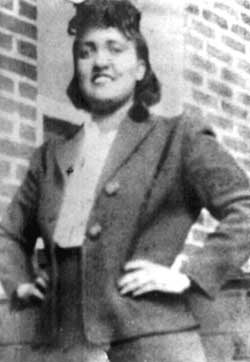
About Henrietta Lacks
Henrietta Lacks was an African-American woman who was the unwitting source of cells (from her cancerous tumor) which were cultured by George Otto Gey to create an immortal cell line for medical research. This is now known as the HeLa cell line. Neither Lacks nor her family gave her physician permission to harvest the cells. At that time, permission was neither required nor customarily sought. The cells were later commercialized. In the 1980's, family medical records were published without family consent. In March 2013, German researchers published the DNA code, or genome, of a strain of HeLa cells without permission from the Lacks family. 

The growth of her cells by a researcher at the hospital helped answer the demands of the 10,000 who marched for a cure to polio shortly before Lacks' death. By 1954, the HeLa strain of cells was being used by Jonas Salk to develop a vaccine for polio. To test Salk's new vaccine, the cells were quickly put into mass production in the first-ever cell production factory.

Demand for the HeLa cells quickly grew. Since they were put into mass production, Henrietta's cells have been mailed to scientists around the globe for "research into cancer, AIDS, the effects of radiation and toxic substances, gene mapping, and countless other scientific pursuits". HeLa cells have been used to test human sensitivity to tape, glue, cosmetics, and many other products. Scientists have grown some 20 tons of her cells, and there are almost 11,000 patents involving HeLa cells.

In the early 1970s, the family of Henrietta Lacks started getting calls from researchers who wanted blood samples from them to learn the family's genetics (eye colors, hair colors, and genetic connections). The family questioned this, which led to them learning about the removal of Henrietta's cells

This issue and Mrs. Lacks' situation was brought up in the Supreme Court of California case of Moore v. Regents of the University of California. On July 9, 1990, the court ruled that a person's discarded tissue and cells are not their property and can be commercialized.  Read more here:  http://en.wikipedia.org/wiki/Henrietta_Lacks

Thursday, January 17, 2013

Canvas & Pen...Art and Literature 2012 Spotlights

Last year our canvas & pen spotlight was on artist Monica Stewart and writer Tia McCollors.  Stay tuned to our Canvas & Pen tab for this spring's spotlight on artist Jacob Lawrence and author, Chimamanda Ngozi Adichie.  We'll have a book club schedule for a couple of Adichie's books as well as a teaching guide for some of Lawrence's art.  Can't wait!

But for now, here's a bit about Monica Stewart and Tia McCollors:


CANVAS
Monica Stewart's "Flow"
Flow by Monica Stewart

I came across Monica Stewart's art a few years ago and "Flow" is my favorite.  This piece seems to echo an ongoing celebration of the beauty of women of color.  Here's a little more about the artist:

Monica Stewart is an African-American artist who resides in Northern California's Bay Area. She has a number of fine art originals, open edition and limited editions prints available. Her work can be seen on television and is also featured on the 1998 Bank of America Commemorative Calendar. Monica is known for her unique use of pastels, brilliant colors and sensitive interpretations of people of color. Monica has recently changed her style and explains,
"My earlier work was predominately rendered with vibrant pastels. As a challenge for myself I decided to reduce my palette to a limited amount of color. Over the last two years I have been working on a material made from Egyptian palm fronds. This material with its natural textures and rich tan and brown colors makes an art statement of its own. It lends itself nicely to the ethnic feel of my latest work. On the Egyptian palm fronds I paint using a combination of mediums, which include India ink, acrylic paint and opaque watercolor. I really enjoy painting positive imagery of people. This can be seen in the majority of my work. In particular Rejoice and Whisper. I look forward to experimenting with other mediums and textures and I will continue to express and share my joy of living through my artwork".

Monica Stewart's paintings reflect a natural ability that was noticed by others quite early in her life. Throughout her school years she was encouraged by her parents and teachers to pursue a career in the art field.
Monica has become a nationally recognized artist. Her work has been seen in various movies and TV programs such as : "Waiting to Exhale, "Romeo Must Die," and the sitcom "Living Single." Monica's artwork has been featured on the California State Lottery and Bank of America calendars. Her images are also featured on a line of family record books, journals, and photo albums. Monica's paintings and prints can be found in many galleries and stores across the country.
Monica enjoys working in various mediums. Through her work Monica says that she enjoys exploring typical human experiences. She feels that she has obtained her goal when the viewer can enjoy her work and find a meaning that is both unique and personal.

Of her work, and the predominance of women in her paintings, Stewart says:
“I have a good understanding of myself as a woman, so I do tend to paint a lot of women. I have a lot of girlfriends, and we talk a lot. So in my work you’ll see a lot of women interchanging, talking, doing whatever.”

To find more about Monica Stewart's art, visit her website:  http://www.monicastewart.com/

******************************************************************
PEN
"Steppin Into The Good Life"
by Tia McCollars

Steppin Into The Good Life tells the story of Sheila who discovers that with faith, tough love, and some tough decisions, Shelia realizes that the life she'd been praying for she could have for herself is actually attainable.
Bestselling author Tia McCollors entices the taste buds of her readers with a sweet blend of faith and fiction in her inspirational novels. After leaving a 10-year career in the corporate arena as a public relations professional, Tia has emerged as a steadfast author of faith-based books.
In addition to being a novelist, Tia is an inspirational speaker and instructor for writing workshops. In 2006, Tia was voted as the Breakout Author of the Year by the Open Book Awards of the African American Literary Awards Show and was honored to be featured in the 2006 edition of Who’s Who In Black Atlanta.  A native of Greensboro, NC, McCollors is a graduate of UNC Chapel Hill.
For more about McCollors, visit her website:  http://tiamccollors.com/

Friday, August 31, 2012

Josephine St. Pierre Ruffin

Josephine St. Pierre Ruffin

On August 31 in Black History....
 

Josephine St. Pierre Ruffin, a black journalist and civil rights leader, was born in Boston, Massachusetts.

Ruffin was born August 31, 1842 into one of Boston's leading black families. In 1858, at the age of 15, she became the wife of George Lewis Ruffin, the first African American to graduate from Harvard Law School. During the Civil War Ruffin was involved in various civil rights causes, charity work, and the women's suffrage movement. In 1879 she established the Boston Kansas Relief Association, a charity organization that provided food and clothing to black Bostonians who were migrating to Kansas. Her philanthropic work brought her in contact with many eminent white and black leaders and her close friends included William Lloyd Garrison, Susan B. Anthony, Elizabeth Cady Stanton, and Booker T. Washington.


From 1890 to 1897 Ruffin served as the editor and publisher of Woman's Era, the first newspaper published by and for African American women. It was used to highlight the achievements of African American women and to champion black women's rights.


In 1894 she organized the Women's Era Club, an advocacy group for black women, with the help of her daughter Florida Ridely and Maria Baldwin, a Boston school principal.

http://www.pbs.org/blackpress/news_bios/newbios/nwsppr/Biogrphs/josephruff/joseph.html

http://aaregistry.org/historic_events/view/josephine-ruffin-activist-suffragist-philanthropist-and-newspaper-publisher

http://en.wikipedia.org/wiki/Josephine_St._Pierre_Ruffin

Wednesday, March 28, 2012

Most Powerful Women in DC


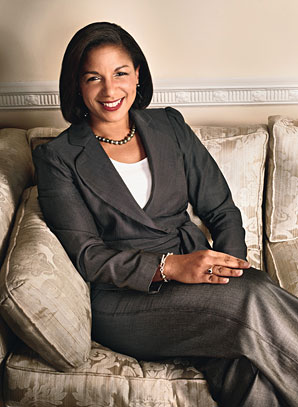
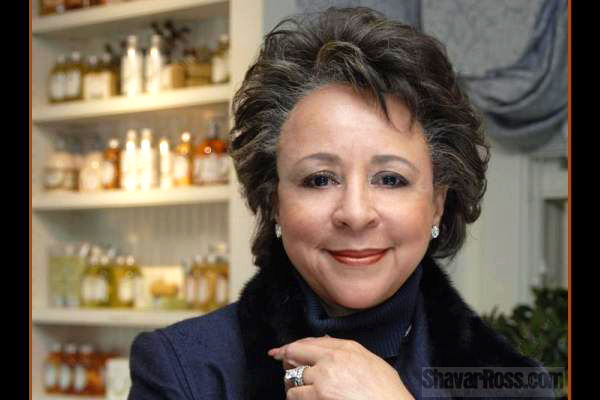
Elle Magazine named Susan Rice and Sheila Johnson among the 10 most powerful women in Washington.

Susan Rice
­Susan Rice, America’s ambassador to the United ­Nations, is a ­famously tough, ­forthright, and passionate advocate who, at 47, is ­already ­a ­veteran of nearly 20 years of foreign-policy and ­diplomatic ­service dating back to the first Clinton administration.

Wednesday, March 7, 2012

Jada Williams 21st Century Abolitionist at 13 Years Old


Jada Williams
"to MY peers people of color in MY generation, blood sweat and tears have been shed for us to obtain any goals which we have set for our set for ourselves...never be afraid to excel and achieve...we are free to learn..."

I came across this story of 13 year old Miss Jada Williams who read The Narrative of the Life of Frederick Douglass over the Christmas break and submitted an essay for a contest.  The Frederick Douglass Foundation contacted Jada and honored her with the Spirit of Freedom award, saying that her essay "actually demonstrates that she understood the autobiography.  On her award are the words, "21st Century Abolitionist".  But it seems not everyone was so impressed:

"In a bold comparative analysis of The Narrative of the Life of Frederick Douglass, Jada Williams, a 13-year old eighth grader at School #3 in Rochester, New York, asserted that in her experience, today's education system is a modern-day version of slavery. According to the Fredrick Douglass Foundation of New York, the schools' teachers and administrators were so offended by Williams' essay that they began a campaign of harassment—kicking her out of class and trying to suspend her—that ultimately forced her parents to withdraw her from the school." Read the entire story.

Watch Jada recite her essay:


Williams' parents say other teachers began to single out their daughter, a problem that a series of meetings failed to address. They requested a transfer from School #3 and the District switched her to School #19. On February 6, her first day at the new school, Williams said she witnessed several fights and didn't feel comfortable going back. Tuesday was her first day attending School #19 in nearly a month. She did not go back Wednesday. Williams feels expressing her opinion about the Frederick Douglass book has ruined her life. Fighting back tears, she said,

 "I love to go to school and I feel like they're taking that away from me."

Williams' mother said this controversy is not about race, but about her daughter's ability to express her thoughts freely. Her essay was recently acknowledged by the Frederick Douglass Foundation of New York, which awarded the 13-year-old its first-ever Spirit of Freedom Award on February 18.  Read more....http://rochesterhomepage.net/fulltext?nxd_id=303562


The Superintendent finally called to apologize Friday night, March 2.  Is this enough?
Please contact Rochester Superintendent of Public Schools Vargas Bolgen at bolgen.vargas@rcsdk12.org or call (585) 262-8100 to voice your concerns about Ms. Jada Williams being force out of school because she wants her classmates to learn.


http://www.whec.com/news/stories/S2521396.shtml?cat=565 
http://rochesterhomepage.net/fulltext?nxd_id=303562

You may also enjoy...

Related Posts Plugin for WordPress, Blogger...

EH Canvas Spotlight - Flow by Monica Stewart

EH Canvas Spotlight - Flow by Monica Stewart
Flow by Monica Stewart