Showing posts with label black women. Show all posts

Monday, May 23, 2016

Melanin Monday Motivator - Awesomely Luvvie

In my last post I explained my inspiration for #melaninmonday motivators when I heard Melissa Harris Perry say, "Every single day, cite a woman of color." Soooo now I'm loudly quoting them on Mondays...

Today's #melaninmonday motivator:

Awesomely Luvvie


Now if you haven't heard of Luvvie, I'm not sure where you've been living your life.  She is Luvvie Ajayi. She is an author, speaker, traveler, shoe lover and organization runner.  She also has a tech blog, Awesomely Techie and an Instagram just for her shoes, MustLuvvShoes.   Many people know her as Awesomely Luvvie which is the name of her main blog (and newsletter) which covers everything from Scandal to Game of Thrones to issues of social justice to just plain shade and side eye.  

I first found Luvvie online when I started watching Scandal in season 3.  I had to catch up, but did not have the time or patience to binge watch it.  Her Scandal recaps give me LIFE.  To be honest most of her posts, especially the side eye ones impact me the same way.  For those of us who live in environments where we do not see ourselves or our perspective reflected on a daily basis, we truly appreciate Luvvie’s voice. And for those who are from another culture, like one of my Fillipino friends, they also love Luvvie.  There's even a glossary for the cultural language and references that non-Black folk may not understand because...Luvvie.

In addition to writing, Luvvie also co-founded the Red Pump Project which is a nonprofit organization that raises awareness about the impact of HIV/AIDS on women and girls.  And with her love of shoes, it is no surprise that they use the Red Pump as a symbol of empowerment to represent the strength and courage of women affected by AIDS.  The Red Pump Project conducts prevention outreach and educational workshops across the country.  

I like to use a person's own words when highlighting them because it gives insight into who they are and who they aim to be.  According to the bio on her site:


“Writer (and Author). Digital Strategist. Red Pump Rocker. Techie. Professional Troublemaker.  I am a Wacky Wordsmith. Pop Culture PrimaDonna. Side-Eye Sorceress. Bodacious Blogger. Witch of Wit. Dynamic Digerati with a Superior Shoe Game. Admirer of Alliteration.”


On September 13, her new book, I'm Judging You:  The Do Better Manual, will be released in stores and online.  I just pre-ordered my copy today and you should too!  You can pre-order I'm Judging You here:  http://luvvie.org/im-judging-you-book/  She's also recorded the audiobook herself.  The book is available in bulk in case you want to want to feature her for your fall book club as well.  Her book tour will be announced will be announced later this summer.

So now that I've told you a little about Luvvie, let me quote her.  This quote comes from one of my favorite posts of 2016, "It was Hella Onyx:  The Blackest Black History Month Ever."  In this post, Luvvie hillariously and truthfully talks about how February 2016 was the dopest Black History Month in recent history.  She suggests that we keep it going with a Black History Year because:

"Once you go UBER Black, you can't go back."
Luvvie Ajayi

So we're giving a shout out and a huge thank you to Luvvie for continually sharing her gifts and her voice with us.  This is only the beginning for you and in your own words...

"My gifts have opened that door for me, and they will continue to put me amongst the greats."
Luvvie Ajayi

Melanin Monday

It was late Friday morning, and I was sitting in a session of a conference.  This was my 2nd conference of the week and I was beat.  As the session was wrapping up, my mind began to wander..I thought of something I read on Luvvie's blog earlier this year.  She says this is a hella onyx year and she is absolutely right. (Read Luvvie's post here) Then I started trying to think of days of the week...like Melanin Monday.  Welp, that's just about as far as I got.  I started to send a tweet to Luvvie and ask her to name the rest of the days of the week for us but she's already named the months of the year so... how about we do something ourselves?  So I thought maybe we could name the days of the week the Ghanaian people name their kids, so Tuesday could be Araba Tuesday. At any rate, I stopped at Melanin Monday.

Actually all last week, I had been thinking about the keynote address that I heard Melissa Harris Perry give on intersectionality last Tuesday at the NCWIT Summit. (National Center for Women in Technology)  Believe me when I tell you that speech and even the Q&A after was EVERYTHING!!!!  I tried to take pictures, but they were not clear enough.  I attempted to live tweet it, but I could not keep up with her.  So then I tried to Periscope it, but only got the end of the Q&A session.  One thing I took away from her was this:  "Every single day, cite a woman of color."   Now you have to watch her speech to get the full context (I told you I could not keep up).  I am, however going to take it a step further.  Every single day, support a woman of color.

I know good and well with my current schedule, that I am not going to write a blog post about a Black woman every day because...well... LIFE :)  What I can do is start a #melaninmonday series where I highlight a living Black woman that has a broad impact on society as we know it.  I have 14 lined up so far.  These women are authors, scientists, educators, mathematicians and entertainers and they all impact various facets of culture, society and the world.  The next step would be for each of us as individuals to recognize the Black women in each of our lives who impact us on a daily basis.

Any ways...here goes..I'm off to write my #melaninmonday post...

Thursday, May 29, 2014

Black Women Leading the World

 Forbes released their list of the 100 most powerful women list.  10 Black women from across the diaspora made the list.

Ursula Burns, Xerox CEO

Among them were Joyce Banda, Ursurla Burns, Ngozi Okonjo-Iweala, Folorunsho Alakija, Michelle Obama, BeyoncĂ©, Oprah Winfrey, Ellen Johnson-Sirleaf, Ertharin Cousin and Helen Gaye. B

Wednesday, January 8, 2014

How It Feels To Be Colored Me....Zora Neale Hurston

Zora Neale Hurston
"BUT I AM NOT tragically colored. There is no great sorrow dammed up in my soul, nor lurking behind my eyes. I do not mind at all.....No, I do not weep.....I am too busy sharpening my oyster knife."  Zora Neale Hurston


Google's 1/7/14 Doodle of the Day

Yesterday, January 7, we celebrated the birthday of Zora Neale Hurston. She was even featured as Google's doodle of the day. You can read more about Zora on her official website, http://zoranealehurston.com/. You can know more about her, however, by reading her writings. As a continued tribute to one of my favorite writers, here's the text of How It Feels To Be Colored Me by Zora:


How It Feels to Be Colored Me 
Zora Neale Hurston 


I AM COLORED but I offer nothing in the way of extenuating circumstances except the fact that I am the only Negro in the United States whose grandfather on the mother's side was not an Indian chief.

I remember the very day that I became colored. Up to my thirteenth year I lived in the little Negro town of Eatonville, Florida. It is exclusively a colored town. The only white people I knew passed through the town going to or coming from Orlando. The native whites rode dusty horses, the Northern tourists chugged down the sandy village road in automobiles. The town knew the Southerners and never stopped cane chewing when they passed. But the Northerners were something else again. They were peered at cautiously from behind curtains by the timid. The more venturesome would come out on the porch to watch them go past and got just as much pleasure out of the tourists as the tourists got out of the village.

The front porch might seem a daring place for the rest of the town, but it was a gallery seat for me. My favorite place was atop the gate post. Proscenium box for a born first nighter. Not only did I enjoy the show, but I didn't mind the actors knowing that I liked it. I usually spoke to them in passing. I'd wave at them and when they returned my salute, I would say something like this: "Howdy do, well I thank you, where you goin'?" Usually automobile or the horse paused at this, and after a queer exchange of compliments, I would probably "go a piece of the way" with them, as we say in farthest Florida. If one of my family happened to come to the front in time to see me, of course negotiations would be rudely broken off. But even so, it is clear that I was the first "welcome to our state" Floridian, and I hope the Miami Chamber of Commerce will please take notice.

During this period, white people differed from colored to me only in that they rode through town and never lived there. They liked to hear me I I speak pieces" and sing and wanted to see me dance the parse me la, and gave me generously of their small silver for doing these things, which seemed strange to me for I wanted to do them so much that I needed bribing to stop, only they didn't know it. The colored people gave no dimes. They deplored any joyful tendencies in me, but I was their Zora nevertheless. I belonged to them, to the nearby hotels, to the county?everybody's Zora.

But changes came in the family when I was thirteen, and I was sent to school in Jacksonville. I left Eatonville, the town of the oleanders, a Zora. When I disembarked from the river boat at Jacksonville, she was no more. It seemed that I had suffered a sea change. I was not Zora of Orange County any more, I was now a little colored girl. I found it out in certain ways. In my heart as well as in the mirror, I became a fast brown warranted not to rub nor run.

BUT I AM NOT tragically colored. There is no great sorrow dammed up in my soul, nor lurking behind my eyes. I do not mind at all. I do not be long to the sobbing school of Negrohood who hold that nature somehow has given them a lowdown dirty deal and whose feelings are all but about it. Even in the helter?skelter skirmish that is my life, I have seer that the world is to the strong regardless of a little pigmentation more of less. No, I do not weep at the world??I am too busy sharpening my oyster knife.

Someone is always at my elbow reminding me that I am the grand daughter of slaves. It fails to register depression with me. Slavery is sixty years in the past. The operation was successful and the patient is doing well, thank you. The terrible struggle that made me an American out of a potential slave said "On the line! " The Reconstruction said "Get set! " and the generation before said "Go! " I am off to a flying start and I must not halt in the stretch to look behind and weep. Slavery is the price I paid for civilization, and the choice was not with me. It is a bully adventure and worthi.all that 1 have paid through my ancestors for it. No one on earth ever had a greater chance for glory. The world to be won and nothing to be lost. It is thrilling to think?to know that for any act of mine, I shall get twice as much praise or twice as much blame. It is quite exciting to hold the center of the national stage, with the spectators not knowing whether to laugh or to weep.

The position of my white neighbor is much more difficult. No brown specter pulls up a chair beside me when I sit down to eat. No dark ghost thrusts its leg against mine in bed. The game of keeping what one has is never so exciting as the game of getting.

I do not always feel colored. Even now I often achieve the unconscious Zora of Eatonville before the Hegira. I feel most colored when I am thrown against a sharp white background.

For instance at Barnard. "Beside the waters of the Hudson" I feel my race. Among the thousand white persons, I am a dark rock surged upon, and overswept, but through it all, I remain myself. When covered by the waters, I am; and the ebb but reveals me again.

SOMETIMES IT IS the other way around. A white person is set down in our midst, but the contrast is just as sharp for me. For instance, when I sit in the drafty basement that is The New World Cabaret with a white person, my color comes. We enter chatting about any little nothing that we have in common and are seated by the jazz waiters. In the abrupt way that jazz orchestras have, this one plunges into a number. It loses no time in circumlocutions, but gets right down to business. It constricts the thorax and splits the heart with its tempo and narcotic harmonies. This orchestra grows rambunctious, rears on its hind legs and attacks the tonal veil with primitive fury, rending it, clawing it until it breaks through to the jungle beyond. I follow those heathen, follow them exultingly. I dance wildly inside myself; I yell within, I whoop; I shake my assegai above my head, I hurl it true to the mark yeeeeooww! I am in the jungle and living in the jungle way. My face is painted red and yellow and my body is painted blue, My pulse is throbbing like a war drum. I want to slaughter something, give pain, give death to what, I do not know. But the piece ends. The men of the orchestra wipe their lips and rest their fingers. I creep back slowly to the veneer we call civilization with the last tone and find the white friend sitting motionless in his seat, smoking calmly.

"Good music they have here," he remarks, drumming the table with his fingertips.

Music. The great blobs of purple and red emotion have not touched him. He has only heard what I felt. He is far away and I see him but dimly across the ocean and the continent that have fallen between us. He is so pale with his whiteness then and I am so colored.

AT CERTAIN TIMES I have no race, I am me. When I set my hat at a certain angle and saunter down Seventh Avenue, Harlem City, feeling as snooty as the lions in front of the Forty?Second Street Library, for instance. So far as my feelings are concerned, Peggy Hopkins Joyce on the Boule Mich with her gorgeous raiment, stately carriage, knees knocking together in a most aristocratic manner, has nothing on me. The cosmic Zora emerges. I belong to no race nor time. I am the eternal feminine with its string of beads.

I have no separate feeling about being an American citizen and colored. I am merely a fragment of the Great Soul that surges within the boundaries. My country, right or wrong.

Sometimes, I feel discriminated against, but it does not make me angry. It merely astonishes me. How can any deny themselves the pleasure of my company? It's beyond me.

But in the main, I feel like a brown bag of miscellany propped against a wall. Against a wall In company with other bags, white, red and yellow. Pour out the contents, and there is discovered a jumble of small, things priceless and worthless. A first water diamond, an empty spool bits of broken glass, lengths of string, a key to a door long since crumbled away, a rusty knife, blade, old shoes saved for a road that never was and never will be, a nail bent under the weight of things too heavy for any nail, a dried flower or two still a little fragrant. in your hand is the brown bag. On the ground before you is the jumble it held, so much like the jumble in the bags could they be emptied that all might be dumped in a single heap and the bags refilled without altering the content of any greatly. A bit of colored glass more or less would not matter. Perhaps that is how the Great Stuffer of Bags filled them in the first place.  Who knows?
Wednesday, December 25, 2013

Elizabeth Roxas-Dobrish, returns to the stage to perform in Alvin Ailey's "Revelations

The voice on the phone belonged to Masazumi Chaya, the associate artistic director of Alvin Ailey American Dance Theater, and he had a startling proposition. Would she — Elizabeth Roxas-Dobrish, 55 years old, former Ailey superstar and current artificial-hip owner — come out of retirement to dance at a special performance on New Year’s Eve?


“Are you kidding me?” 
Elizabeth Roxas-Dobrish (NY Times Photo)

she responded.

No he was not kidding and Roxas-Dorbrish has come out of retirement along with other alumni Guillermo Asca, Linda-Denise Fisher-Harrell, Renee Robinson, Donna Wood Sanders, and Dudley Williams, are returning to the stage to perform in the Alvin Ailey classic, "Revelations" on December 31 at 7pm.


REVELATIONS
The first performance of Revelations was on January 31, 1960 in New York's Kaufman Concert Hall. This enduring classic is a tribute to that tradition, born out of the choreographer’s “blood memories” of his childhood in rural Texas and the Baptist Church. But since its premiere in 1960, the ballet has been performed continuously around the globe, transcending barriers of faith and nationality, and appealing to universal emotions, making it the most widely-seen modern dance work in the world.

http://www.alvinailey.org/about/company/alvin-ailey-american-dance-theater/repertory/revelations#


Friday, December 13, 2013

Real Diversity or Token?


In this Oct. 29, 2013, file photo released by NBC, actress Kerry Washington, right, stands with cast member Taran Killam during a promotional shoot for Saturday Night Live, in New York.
Kerry Washington hosting SNL last month

SNL has taken a bit of heat about the lack of diversity among its cast members over the last several years. One of their responses has been to hold casting calls for African-American women.  It seems we may be seeing a new face or two pretty soon.  Even so, we all know the challenges of being the first and/or the only....what about the challenges of being the "token."  Will the people they hire always feel like they were hired just because they were black?  At what point do you transition from being the "token" hire to the real value added hire?   Either way, I wish them very much success.  Maybe now the African-American men in the show won't have to play women anymore.

Read the story here:

http://abclocal.go.com/kgo/story?section=news/entertainment&id=9358676

http://www.nytimes.com/2013/12/13/business/media/snl-to-add-black-female-cast-member-in-january.html

Friday, August 9, 2013

Congratulations Gabrielle Turnquest, the Youngest Person to Pass the Bar

Teenager becomes youngest person to be called to the Bar
Gabrielle Turnquest

“I am honoured to be the youngest person to pass the Bar exams but, really, I was not aware at the time what the average age was....“I didn’t fully realise the impact of it.”  Gabrielle Turnquest


Gabrielle Turnquest, 18, just became the youngest person to pass the Bar of England and Wales.  She actually took the course with her sister, Kandi, 22, who passed the Bar as well.  Gabrielle, a native of Florida, had already made history at 16 when she became the youngest person to complete an undergraduate degree in psychology.  She wants to become a fashion law specialist.

Read more here:  http://www.telegraph.co.uk/news/uknews/law-and-order/10211936/Teenager-becomes-youngest-person-to-be-called-to-the-Bar.html


Thursday, August 8, 2013

Henrietta Lacks' Family Gets a Win


"On Tuesday, the National Institute of Health announced it was, at long last, making good with Lacks’ family. Under a new agreement, Lack’s genome data will be accessible only to those who apply for and are granted permission. And two representatives of the Lacks family will serve on the NIH group responsible for reviewing biomedical researchers’ applications for controlled access to HeLa cells. Additionally, any researcher who uses that data will be asked to include an acknowledgement to the Lacks family in their publications.
200pThe new understanding between the NIH and the Lacks family does not include any financial compensation for the family. The Lacks family hasn’t, and won’t, see a dime of the profits that came from the findings generated by HeLa cells. But this is a moral and ethical victory for a family long excluded from any acknowledgment and involvement in genetic research their matriarch made possible."  Read more here:  http://thegrio.com/2013/08/07/nih-finally-makes-good-with-henrietta-lacks-family-and-its-about-time-ethicist-says/
But does this make up for the fact that they have made money for all these years and the family will never see any at all?  I honestly do not think so...


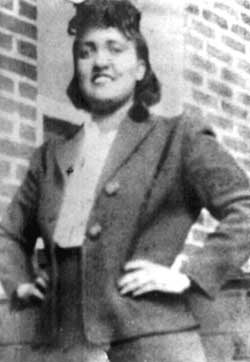
About Henrietta Lacks
Henrietta Lacks was an African-American woman who was the unwitting source of cells (from her cancerous tumor) which were cultured by George Otto Gey to create an immortal cell line for medical research. This is now known as the HeLa cell line. Neither Lacks nor her family gave her physician permission to harvest the cells. At that time, permission was neither required nor customarily sought. The cells were later commercialized. In the 1980's, family medical records were published without family consent. In March 2013, German researchers published the DNA code, or genome, of a strain of HeLa cells without permission from the Lacks family. 

The growth of her cells by a researcher at the hospital helped answer the demands of the 10,000 who marched for a cure to polio shortly before Lacks' death. By 1954, the HeLa strain of cells was being used by Jonas Salk to develop a vaccine for polio. To test Salk's new vaccine, the cells were quickly put into mass production in the first-ever cell production factory.

Demand for the HeLa cells quickly grew. Since they were put into mass production, Henrietta's cells have been mailed to scientists around the globe for "research into cancer, AIDS, the effects of radiation and toxic substances, gene mapping, and countless other scientific pursuits". HeLa cells have been used to test human sensitivity to tape, glue, cosmetics, and many other products. Scientists have grown some 20 tons of her cells, and there are almost 11,000 patents involving HeLa cells.

In the early 1970s, the family of Henrietta Lacks started getting calls from researchers who wanted blood samples from them to learn the family's genetics (eye colors, hair colors, and genetic connections). The family questioned this, which led to them learning about the removal of Henrietta's cells

This issue and Mrs. Lacks' situation was brought up in the Supreme Court of California case of Moore v. Regents of the University of California. On July 9, 1990, the court ruled that a person's discarded tissue and cells are not their property and can be commercialized.  Read more here:  http://en.wikipedia.org/wiki/Henrietta_Lacks

Saturday, April 13, 2013

The Wonderful Adventures of Mrs. Seacole

Jamaican born Mary Seacole was a nurse who many considered to be the heroine of the Crimean War. In fact, Seacole was widely known among the soldiers of the British Army as "Mother Seacole." She documented her adventures in her autobiography, "Wonderful Adventures of Mrs. Seacole in Many Lands."

Read more about Mary Seacole here: http://www.bbc.co.uk/history/historic_figures/seacole_mary.shtml

Friday, August 31, 2012

Josephine St. Pierre Ruffin

Josephine St. Pierre Ruffin

On August 31 in Black History....
 

Josephine St. Pierre Ruffin, a black journalist and civil rights leader, was born in Boston, Massachusetts.

Ruffin was born August 31, 1842 into one of Boston's leading black families. In 1858, at the age of 15, she became the wife of George Lewis Ruffin, the first African American to graduate from Harvard Law School. During the Civil War Ruffin was involved in various civil rights causes, charity work, and the women's suffrage movement. In 1879 she established the Boston Kansas Relief Association, a charity organization that provided food and clothing to black Bostonians who were migrating to Kansas. Her philanthropic work brought her in contact with many eminent white and black leaders and her close friends included William Lloyd Garrison, Susan B. Anthony, Elizabeth Cady Stanton, and Booker T. Washington.


From 1890 to 1897 Ruffin served as the editor and publisher of Woman's Era, the first newspaper published by and for African American women. It was used to highlight the achievements of African American women and to champion black women's rights.


In 1894 she organized the Women's Era Club, an advocacy group for black women, with the help of her daughter Florida Ridely and Maria Baldwin, a Boston school principal.

http://www.pbs.org/blackpress/news_bios/newbios/nwsppr/Biogrphs/josephruff/joseph.html

http://aaregistry.org/historic_events/view/josephine-ruffin-activist-suffragist-philanthropist-and-newspaper-publisher

http://en.wikipedia.org/wiki/Josephine_St._Pierre_Ruffin

Saturday, April 7, 2012

Malawi's First Female President


Joyce Banda, President of Malawi

I was at church for an Easter play today and one of the ladies that was volunteering with me was just beside herself.  She told me she was so excited because her country, Malawi just got their first female president.  Joyce Banda, vice president, was sworn in as the new president of Malawi today in a ceremony today in the capital, Lilongwe. 

A winner of national and international awards for her work as a supporter of women's rights, Banda was last year named by Forbes Magazine as Africa's third most powerful female politician after Liberian President Ellen Johnson Sirleaf and Nigerian Minister of Finance Ngozi Okonjo-Iweala.


http://en.wikipedia.org/wiki/Malawi
http://www.msnbc.msn.com/id/46984487/ns/world_news-africa/
http://abcnews.go.com/blogs/headlines/2012/04/new-president-malawi-second-woman-head-of-state-africa/

Wednesday, March 28, 2012

Most Powerful Women in DC


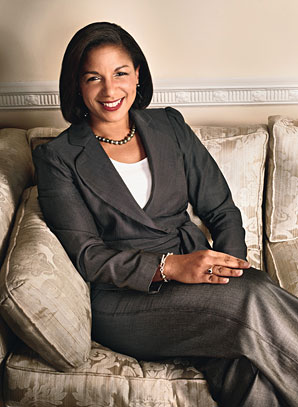
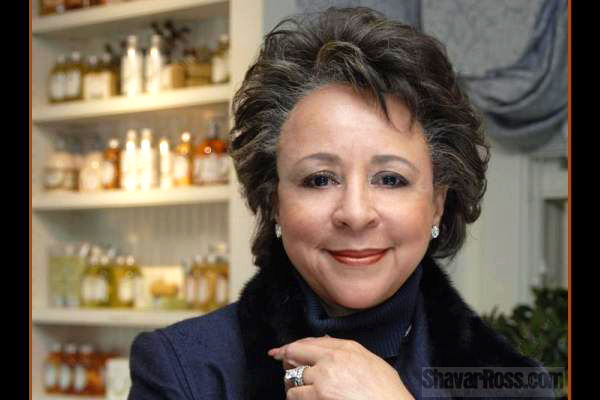
Elle Magazine named Susan Rice and Sheila Johnson among the 10 most powerful women in Washington.

Susan Rice
­Susan Rice, America’s ambassador to the United ­Nations, is a ­famously tough, ­forthright, and passionate advocate who, at 47, is ­already ­a ­veteran of nearly 20 years of foreign-policy and ­diplomatic ­service dating back to the first Clinton administration.

Sunday, February 19, 2012

Black Girls Run!

Wellness Fall Spotlight - Black Girls Run
Our Wellness tab focuses on health and wellness in the African-American community.  Be sure to check out our Wellness tab for our current spring wellness spotlight, "Let's Move."  

Our Fall 2011 Spotlight featured Black Girls Run.

With the increasing focus on African-American wellness, many organizations are bringing awareness and empowerment to the Black community to take their health into their own hands. Black Girls Run is doing a fabulous job of just that.

Do Black Girls Run? Of course we do. In 2009, Toni Carey and Ashley Hicks created Black Girls RUN! in an effort to tackle the growing obesity epidemic in the African-American community and provide encouragement and resources to both new and veteran runners. The mission of Black Girls RUN! is to encourage African-American women to make fitness and healthy living a priority. According to the Centers for Disease Control, 80% of African-American women are overweight. BGR! wants to create a movement to lower that percentage and subsequently, lower the number of women with chronic diseases associated with an unhealthy diet and sedentary lifestyle.

Personal Note:  I have recently made a commitment to learn to run and am loving it!  I also joined the local Black Girls Run group and am loving it! On the BGR Facebook group we share tips on running for beginers and experienced runners. There are various running meet-ups throughout the Bay area during the week. I'm training to run the Oakland 5k in March and then the  DIVA Half Marathon in San Francisco in May. Follow us on twitter to see our progress @ExperienceHstrY.


For more about BGR, visit their website, http://www.blackgirlsrun.com/about/

The following article appeared in the Greensboro News & Record newspaper in Greensboro, NC in August 2011:
Several African-American women in Greensboro are choosing their health. These women, organized as a Black Girls Run! group, are walking, jogging and racing their way into an endurance sport that has largely been populated by lean, white runners.
Indeed, black girls run. Their Facebook group is approaching 100 members. Workouts on Monday and Thursday evenings and on Saturday mornings have turned out up to 25 runners. They're lacing up to battle the well-chronicled statistics on obesity, which show that nearly four in five African-American women are considered overweight and are at higher risk for high blood pressure, heart disease and stroke.
Robin Perry, the ambassador for Greensboro's Black Girls Run! group, is leading the charge, along with her co-ambassador, Bebe Ramzah. The energy from these two running and health evangelists will challenge the best gel or sports drink.
"I guess they see this as a passion of mine," Perry says. "That maybe 'we can do it, too.' You see people and how they look. I’m 48 years old; I don’t look 48. I want to stay healthy."
BGR Founders Toni Carey and Ashley Hicks
Perry's and Ramzah's roles as ambassadors are multiple: They convert more followers. They advise group members about where they can find gear. They hand out information about training plans, whether it's Couch to 5K or Hal Higdon's half-marathon. They talk about nutrition. They put out water for group runs. They coach and they mentor, and they make sure no one gets left behind.
"When I first started, I couldn't even do five minutes on the treadmill," says Ramzah, 40. "But now I've been running for two years.”
In late June, Ramzah turned in 10-minute miles in completing the Freedom Run 10K downtown. Perry, meanwhile, finished a half-marathon in the Bahamas in January, will enter another one in September in Virginia Beach, Va., and wants to return to the Bahamas next January to complete a full.
Perry and Ramzah are coaching several runners who are building up to the Women's Only 5K Walk & Run in Greensboro on Oct. 1.
Perry, a native New Yorker who has served as a licensed practical nurse in the Army Reserve, has recruited to the group by using Facebook, posting flyers and grabbing people in the streets and in the gym.
“Running is my passion," Perry says. "It has helped me get through my divorce. I grew up in Harlem; it’s helped me get through a lot of things.”
Toni Carey and Ashley Hicks started Black Girls Run! nationally in 2009. What began as a blog has turned into a web site, complete with Black Girls Run! gear. Hicks says that the current 40 groups across the nation, including ones in Raleigh and Charlotte, will likely become 80 within a couple of weeks.
"A lot of times people are intimidated, don’t want to get started and don’t even know how," Hicks says. "Now they have the tools to get started and they have a support system. A lot of our groups have a lot of walkers, they’re getting out there and starting to jog a bit."
And, being clearly in a minority in endurance running, they're drawing attention.
"When we're out running, we get that all the time," Ramzah says. "Like, 'What’s going on?'"
What's going on is that these Greensboro women are running to get in shape, to combat the health risks. To do that, they're also having to let their hair down -- or rather, let it go. Naturally. That's one key reason you don't see more African American women competing in road and trail races.
"For us it's a process of getting our hair straight," Ramzah says. "For a lot of African-American women, that’s the first thing they tell you, 'I don’t want to sweat out my hair.' It's more important for me to get out and be healthy and be in shape.
"I love to run and I love to compete. I put that as a priority to how I may look."http://www.news-record.com/blog/64298/entry/124672

You may also enjoy...

Related Posts Plugin for WordPress, Blogger...

EH Canvas Spotlight - Flow by Monica Stewart

EH Canvas Spotlight - Flow by Monica Stewart
Flow by Monica Stewart